
What Is a Body Kit? Types, Parts, and What a "Full Kit" Really Includes
A body kit is a set of exterior panels and aero parts, not one product — so what a full kit includes depends on the seller. Types, parts and what is left out.
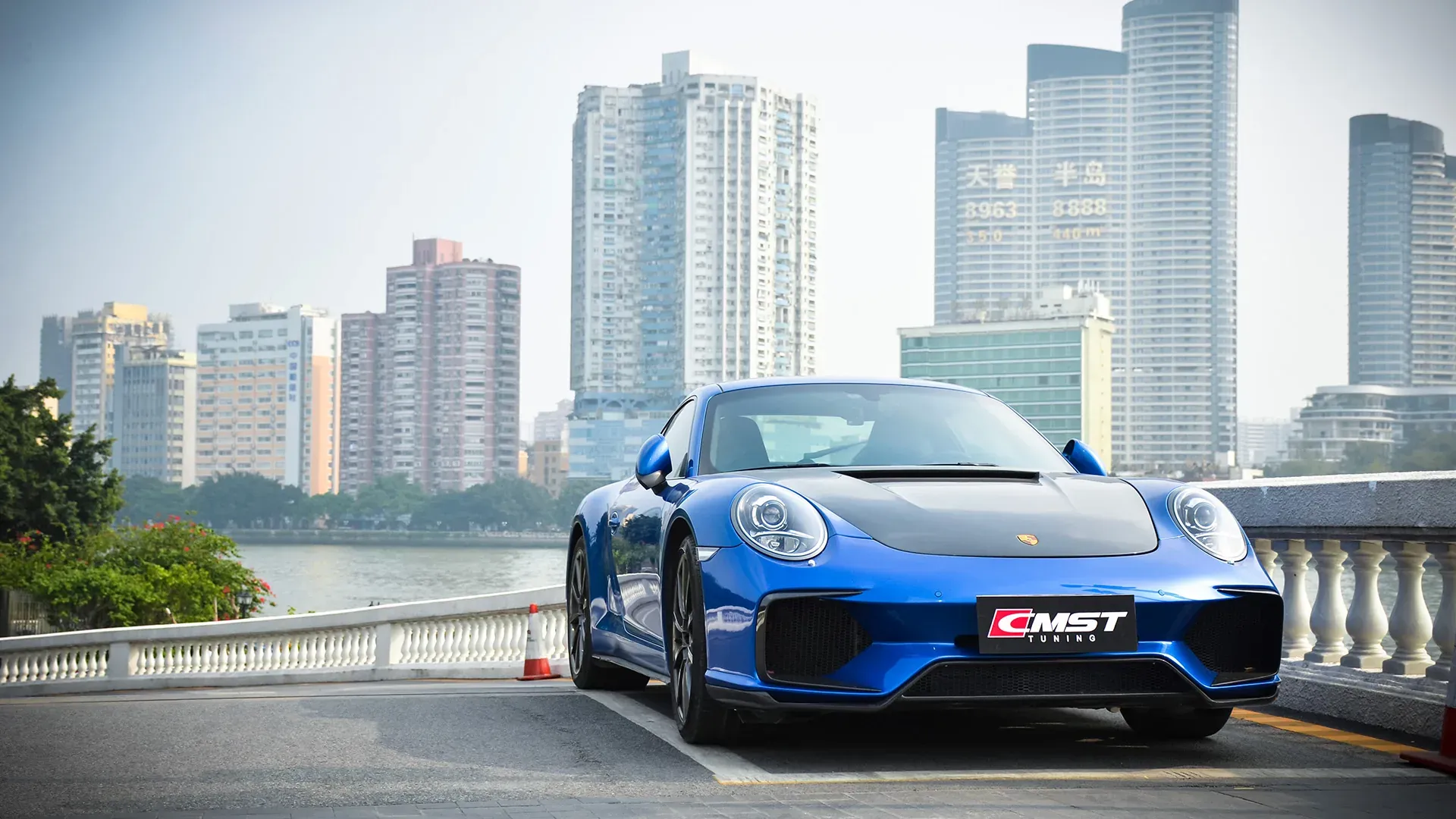
Ask ten sellers what a body kit is and you will get ten contents lists. A body kit is a set of exterior parts fitted to a car to change its shape — bumper covers, side skirts, lips, diffusers, spoilers, arch extensions, and sometimes fenders and a hood. That definition is complete, and it is also the source of most of the confusion around the term: it names a group of parts, not a product with fixed contents. Two sellers can both advertise a body kit and be selling things that share almost nothing.
What follows is the working definition, the four types you will actually be quoted, a map of the parts by zone, an honest account of what a "full kit" includes and leaves out, how material choice changes the result, and the six things worth checking in a listing before money changes hands. If your question is narrower — whether going wider is worth the bodywork at all — the widebody guide takes that decision end to end.
What Is a Body Kit? The Working Definition
The encyclopedic version is accurate as far as it goes: a body kit is a set of modified body parts or additional components installed on a car, typically front and rear bumpers, side skirts, spoilers and bonnets, sometimes side guards and roof scoops (Body kit, Wikipedia). Note what that list mixes: some of those items are replacements for panels the car already has, and some are additions that sit on top of them.
That distinction does more work than any other in this subject.
A replacement part is a new panel where a factory panel used to be — a front bumper cover in place of the original, a fender in place of the original, a hood in place of the original. The factory part comes off and generally does not go back on. Fitment is judged at the shut lines and the mounting points.
An add-on part attaches to the surface the car already has — a lip under the front bumper, skirts along the sill, canards on the corners, a diffuser under the rear bumper, a spoiler on the trunk lid. Nothing is removed. Fitment is judged at the edges, where the new part meets the old one, and the whole thing can be reversed.
A kit is usually a mix of both, and the mix is what tells you how much work is involved. Four add-on parts can be fitted in an afternoon with the car on the ground. A kit that replaces both bumper covers needs a paint booth, a sensor transfer and a panel-alignment pass.
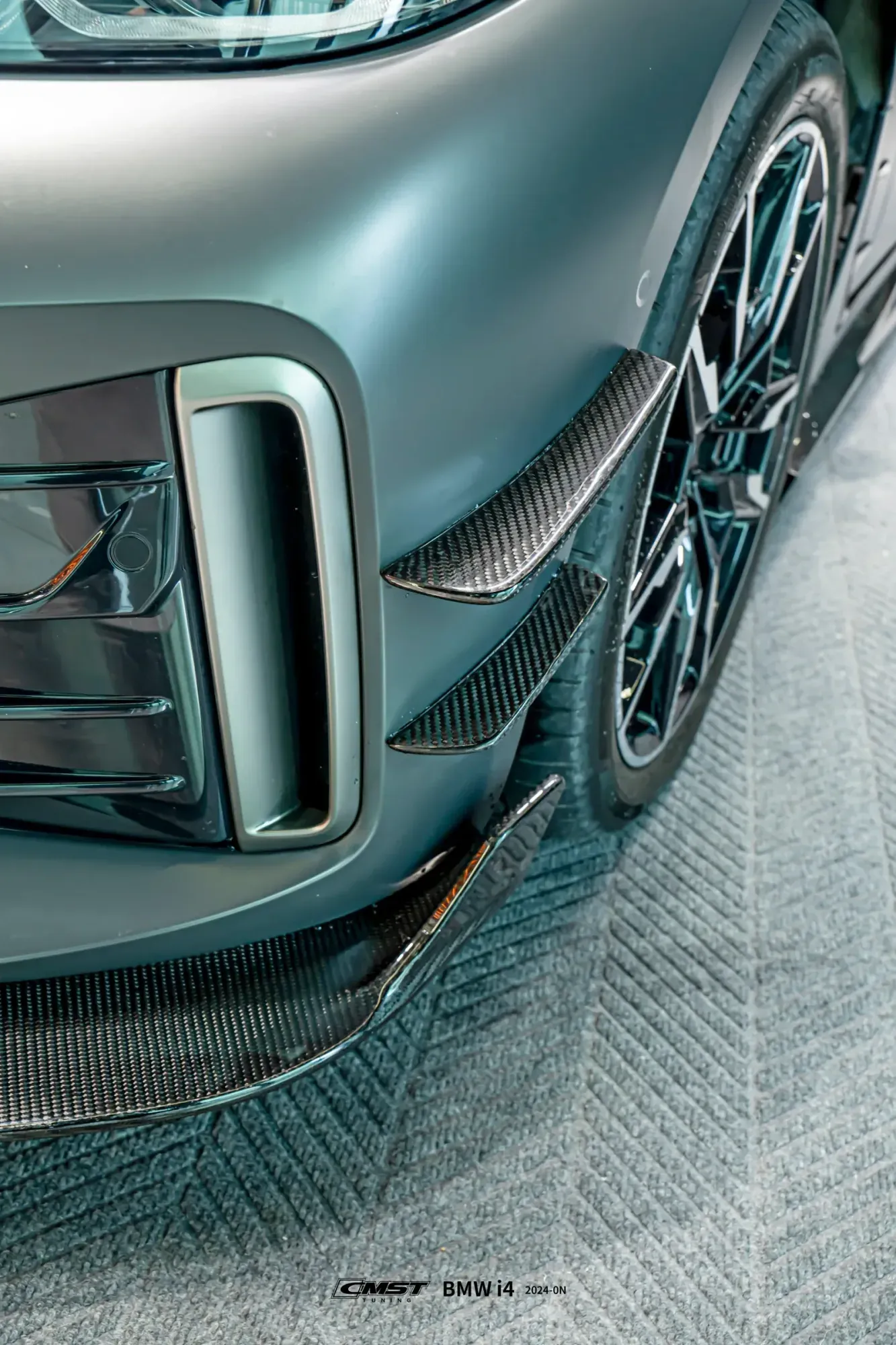
Two terms that get confused with body kits, for the record: a kit car is a vehicle sold as a set of parts for the buyer to assemble, which is a different product category entirely; and a widebody is a body kit whose job is width rather than a different kind of object — what a widebody kit is covers that branch separately.
The Four Kinds of Kit You Will Actually Be Quoted
Sellers use a handful of labels loosely. These are the four that come up, and what each one commits you to.
Type | What it changes | What it replaces | What the install demands |
|---|---|---|---|
Lip kit | The lower edge of the bumpers and sills | Nothing — everything is an add-on | Trim and test fit, then tape, sealant or screws; no paint if the part arrives finished |
Bumper kit / ground effects | The bumper covers, usually with skirts | Both bumper covers, sometimes the side skirts | Paint, transfer of grilles, fog lamps and parking sensors, panel alignment |
Full kit | Most of the visible lower body | Bumper covers, skirts and rear trim | The bumper-kit work plus more parts to align to each other |
Widebody conversion | The car's width | Arch flares or replacement quarter panels, wider bumper ends | Bodywork, cutting or bonding, wheel offset and tire choice, a body shop rather than a driveway |
Two labels in that table cause most of the arguments.
"Ground effects" is an old hot-rod term for parts that manage airflow under and around the body; sellers now use it for almost any lower-body kit, including parts with no aerodynamic claim at all. And "widebody" is often applied to a set of bolt-on arch flares, which is a much smaller job than a conversion that replaces the quarter panels — the difference is whether the car's metal is cut.
Widebody is also the one type the main site sells rather than explains: the widebody kit range is where that product line lives, and this article stays on the definition side of it.
The Parts Map: What Can Be in the Box
Body kit parts are named by where they sit on the car, and the same part can be an addition or a replacement depending on the kit. This is the full vocabulary a listing might use.
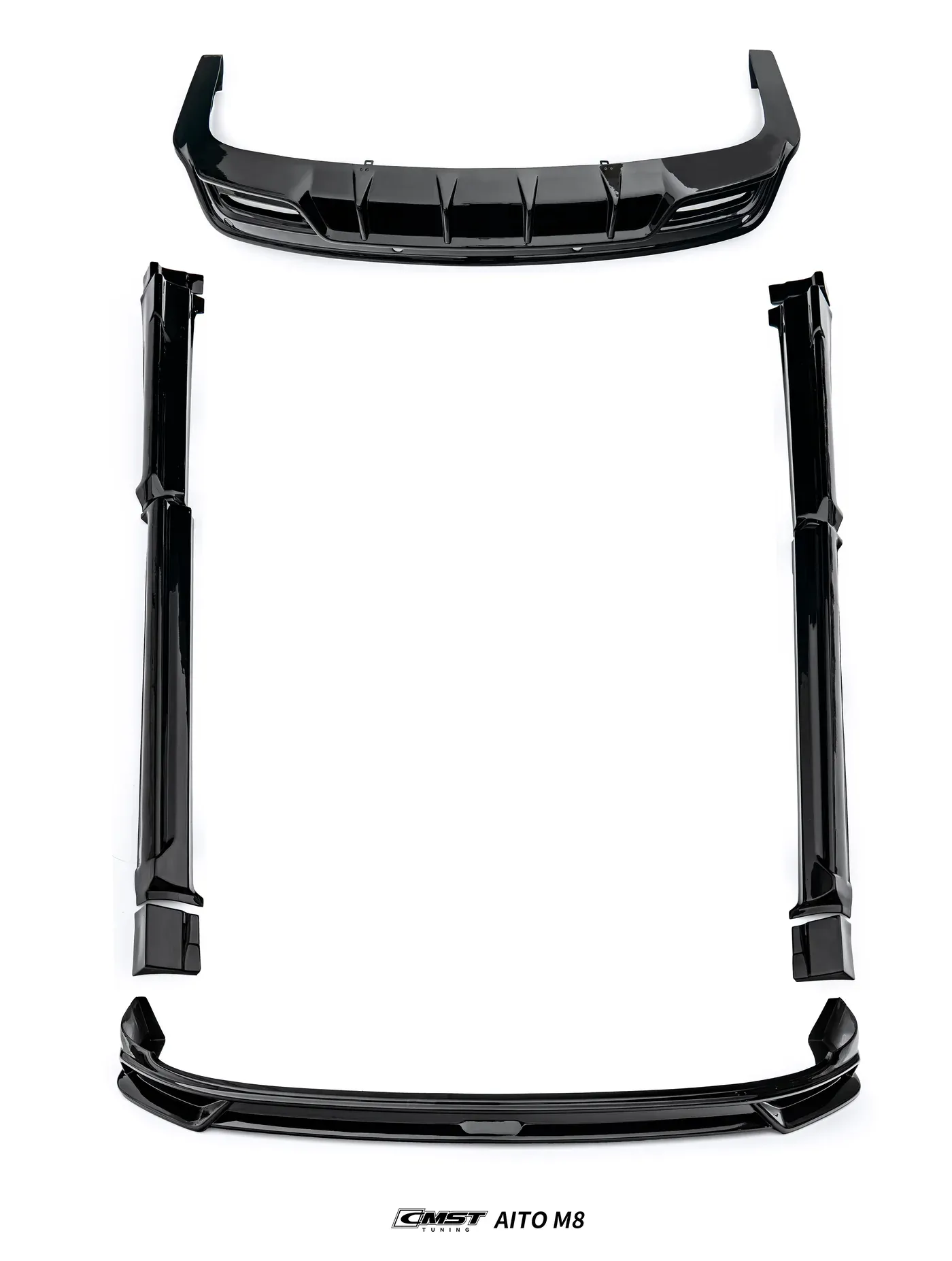
Zone | Part | What it does | Add-on or replacement |
|---|---|---|---|
Front | Front lip / splitter | Extends the lower bumper edge forward | Add-on |
Front | Canards | Small horizontal fins on the bumper corners | Add-on |
Front | Bumper cover | The whole front skin, with its own grille and lamp openings | Replacement |
Sides | Side skirts | Covers the sill between the arches, visually lowers the car | Either — some clip over the sill, some replace the sill trim |
Sides | Arch flares / overfenders | Adds width over the wheel arch | Add-on, but usually needs trimming at the arch lip |
Rear | Rear bumper cover | The rear skin, with diffuser cut-outs | Replacement |
Rear | Diffuser | Straightens and speeds up the air leaving under the car | Add-on |
Rear | Spoiler / lip spoiler | Sits on the trunk lid, follows its curve | Add-on |
Rear | Wing | Stands on brackets above the trunk | Add-on, usually needs holes or clamps |
Top | Hood / bonnet | Vented or lighter panel | Replacement |
Top | Trunk lid | Often paired with a wing | Replacement |
Two entries in that table surprise buyers. A "one-piece front end" — a single molding that replaces the bumper and both front fenders together — appears in race-derived kits and is a much bigger commitment than a bumper cover, because the fenders come off with it. And a wing is not a spoiler: a spoiler follows the body surface, a wing stands off it on brackets, and the two need different mounting and produce different loads on the lid.
What "Full Kit" Really Includes — and What It Doesn't
Here is the part of the subject almost nobody states plainly. "Full kit" has no industry definition. It is a commercial label, and each seller fills it. In listings for the same model you will find "full kit" used for a four-piece lip set and for a twelve-piece conversion with fenders and a hood.
The only reliable specification is the piece list: how many parts, which ones, and what part numbers. A seller who cannot send that list in writing has not defined the product yet.
Counts also drift because the boundary of the set is a business decision. One maker's complete package will include the hood; the next excludes it and sells it separately, because a hood is a large, low-volume molding with its own tooling. That is not sharp practice — it just has to be visible before you order. The catalogue entry for a complete set on this site states the exclusion up front: the full package is listed as complete body kits with the bonnet explicitly outside the package, and the individual sections quoted separately.
Beyond the panels, these are the items that are almost never in the box, and each one has a cost attached:
- Paint. FRP parts arrive primed and paint-ready. Matte black moldings arrive finished. Bare carbon arrives with its weave showing. If the car is a color the panels were not finished in, a spray booth is part of the project.
- Lamps, grilles and badges. These transfer from the original bumper on a replacement kit. If the new cover has different openings, the original units may not fit.
- Exhaust tips and surrounds. A rear bumper with a diffuser usually assumes a specific exhaust layout.
- Wheels and spacers. A widebody needs a wider track or a different offset to fill the new arches; the arches alone will leave the wheels looking sunken.
- Fitting labor, and the second fit after paint. Anything painted goes on twice — once to check, once to finish.
There is one more exclusion worth naming because it is structural rather than commercial. A bumper cover is a skin. Behind it sits the bumper beam and its energy absorber, and in the US the performance of that assembly in low-speed front and rear impacts is what 49 CFR Part 581 regulates, for the vehicle classes it covers. A body kit changes what the car looks like at that end; whether the structure behind the cover stays intact is a separate question, and a fair one to ask any supplier whose kit replaces a bumper cover.
So the working definition of a full kit is not a number of pieces. It is: the panels listed, in the material named, with the hardware stated, and everything else written down as an exclusion.
What the Kit Is Made Of Decides More Than the Shape
Two kits can look identical in a photograph and behave completely differently on a car, because the material decides weight, what arrives finished, and how much the part moves after it leaves the mold.
Material | What it is | What that means on delivery |
|---|---|---|
FRP (glass fiber reinforced plastic) | Glass fiber in a resin matrix, the classic composite arrangement (Composite material) | Arrives primed; needs paint; the usual route for large bumper shells and arch sets |
Polyurethane (PU) | A polymer family that can be formulated flexible or rigid (Polyurethane) | The flexible end resists minor impacts and takes paint; common in aftermarket kits, and not one of the five grades the material page lists |
ABS | Vacuum-formed thermoplastic sheet, color molded in | Goes on as delivered in gloss or matte black; no paint step |
PP (polypropylene) | Injection-molded thermoplastic | Dimensionally repeatable at volume and impact tolerant; the family most OEM bumper covers come from |
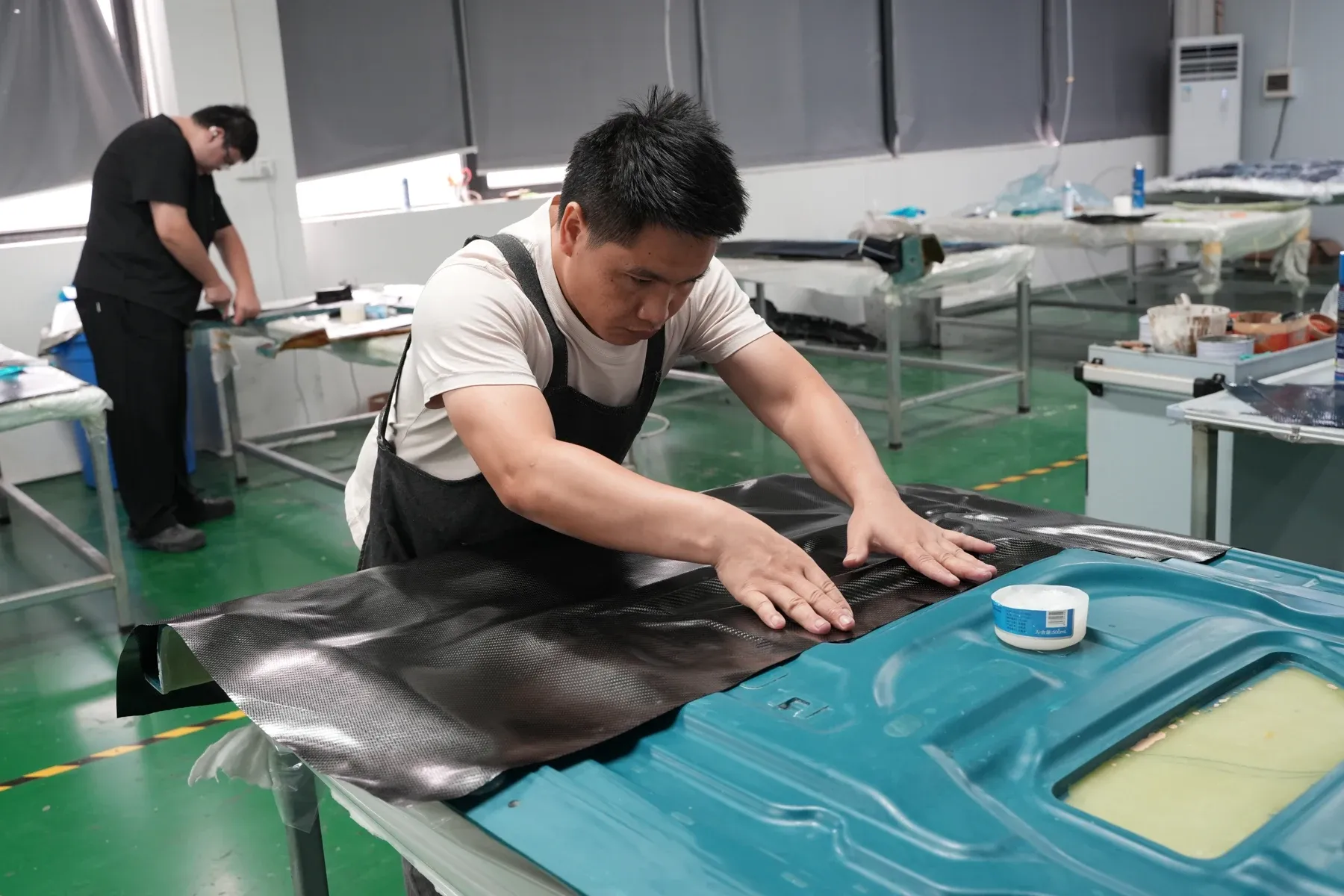
Vacuum carbon | Carbon cloth with resin applied during lay-up, formed under vacuum at high temperature, clear coated | Gloss carbon surface, no paint; the volume carbon grade |
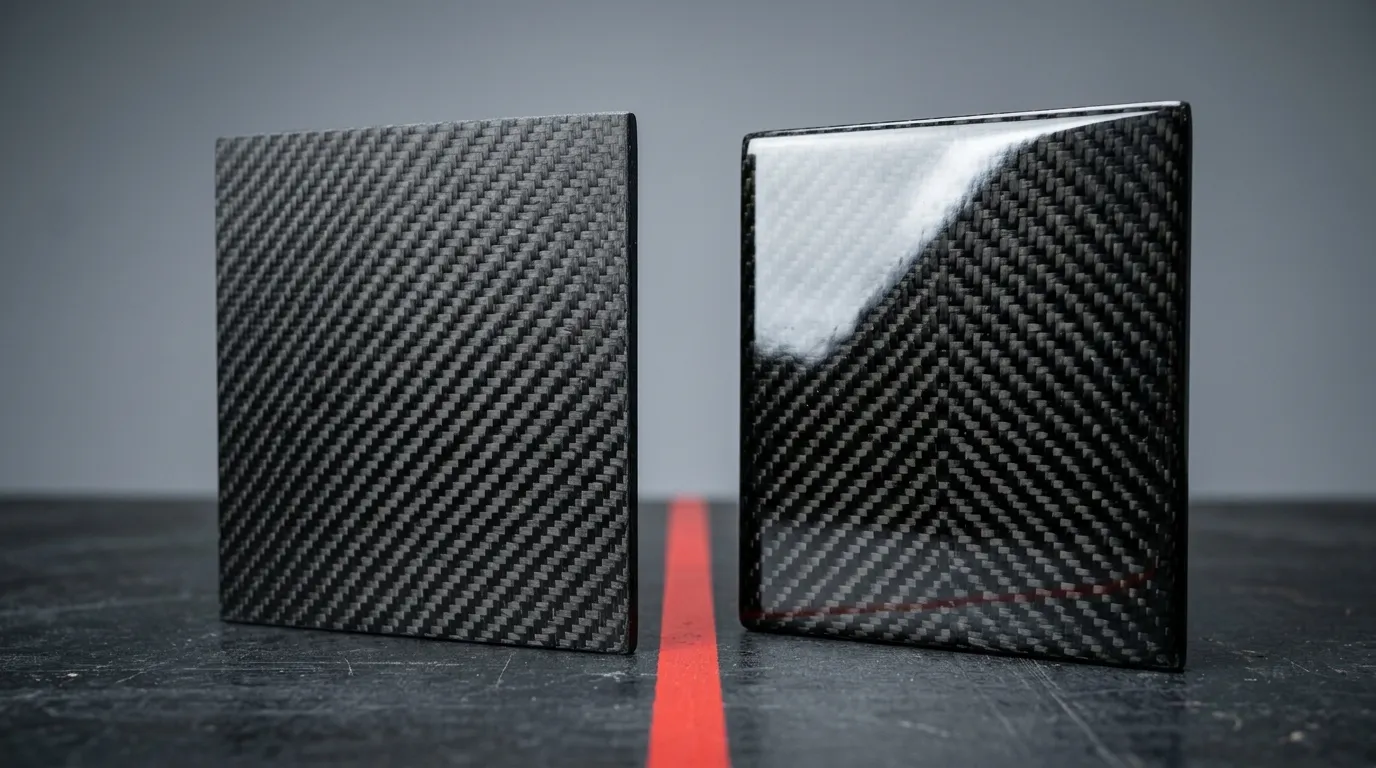
Dry carbon | Prepreg — cloth already impregnated at a controlled resin ratio — cured under heat and pressure | Finished weave straight out of the mold, and the lightest of the set |
The practical consequence is that material choice is a schedule decision as much as a looks decision. ABS goes on the car the day it arrives. FRP needs a booth and a drying window. Dry carbon needs neither paint nor a separate clear-coat job, and vacuum carbon arrives already cleared — which is part of what the price difference buys.
This is also where the trade vocabulary gets sloppy: "carbon fiber" describes the reinforcement, not the process, so a wet-laid part and a prepreg part are both carbon and are not the same product. The five grades a part can be tooled in, and what each one arrives looking like, are set out on the material grades page.
Fitment: The Part That Decides Whether the Kit Is Worth Having
A kit that arrives with the right shape and the wrong gaps is worse than no kit, because the money is already spent. Three things get confused under the word fitment: whether the mounting points meet the car's existing holes, whether the panel sits flat against the body without being forced, and whether the visible gaps and steps match the rest of the car. A part can pass the first and fail the third.
"Bolt-on" only promises the first. It describes how a part is fixed, not how it will look. Factory bumper covers are fixed the same way, and factory lines still adjust panels before the car ships. What a bolt-on kit honestly commits to is holes in positions that correspond to the car, hardware in the box, and no cutting or glass-fiber work on the body.
Test fitting is the step that catches the rest, and its order matters: hang the panel on two points, read the contact pattern, measure the gaps at both ends of every join, then compare with the other side of the car. Paint comes after that pass, never before, because paint thickness lands in the gap. The full method, including how to tell an adjustable gap from a panel that has to be remade, is in how fitment works.
Widebody adds a step earlier in the process. Arch flares that bolt over the existing lip, replacement quarter panels that require cutting, and bumper ends that are wider than the originals are three different projects, and only the first is reversible. Sensors make the same point on the front and rear: parking sensors and radar units sit behind bumper covers, so a replacement cover has to carry their mountings and keep them aimed where they were.
Six Things to Check in a Listing
Most of the disappointment in this category is visible in the listing before you order. These are the six checks, in the order that saves the most time.
- The piece count and the part numbers. "Full kit" without a list is a word, not a specification. Ask for the piece list; a seller with a real kit has one.
- Replacement or add-on. Look at the photographs for the original bumper or sill underneath. If the listing does not say, ask — the installation, the paint and the reversibility all follow from this.
- The material, named properly. "Carbon look" is a finish. FRP, ABS, PP and carbon are materials. A listing that will not name the material has usually not decided it yet.
- Year, facelift and trim coverage. A kit that spans a facelift without saying so is the most common source of a return. Check the kit against your own model year in the vehicle list rather than against the brand name.
- Hardware and instructions. Fasteners, brackets, templates and fitting notes should be stated as included, and the mounting points should be existing holes rather than new ones.
- Photographs of that kit on a car, and a fitment policy. Renders flatter everything. A supplier with a process can also tell you what happens if a panel arrives outside tolerance — photographs, a measured gap, and a replacement decision inside a stated window.
Where These Kits Come From
The differences above are mostly decided before anyone fits a part: in the tooling, and in what the seller chooses to put in the box.
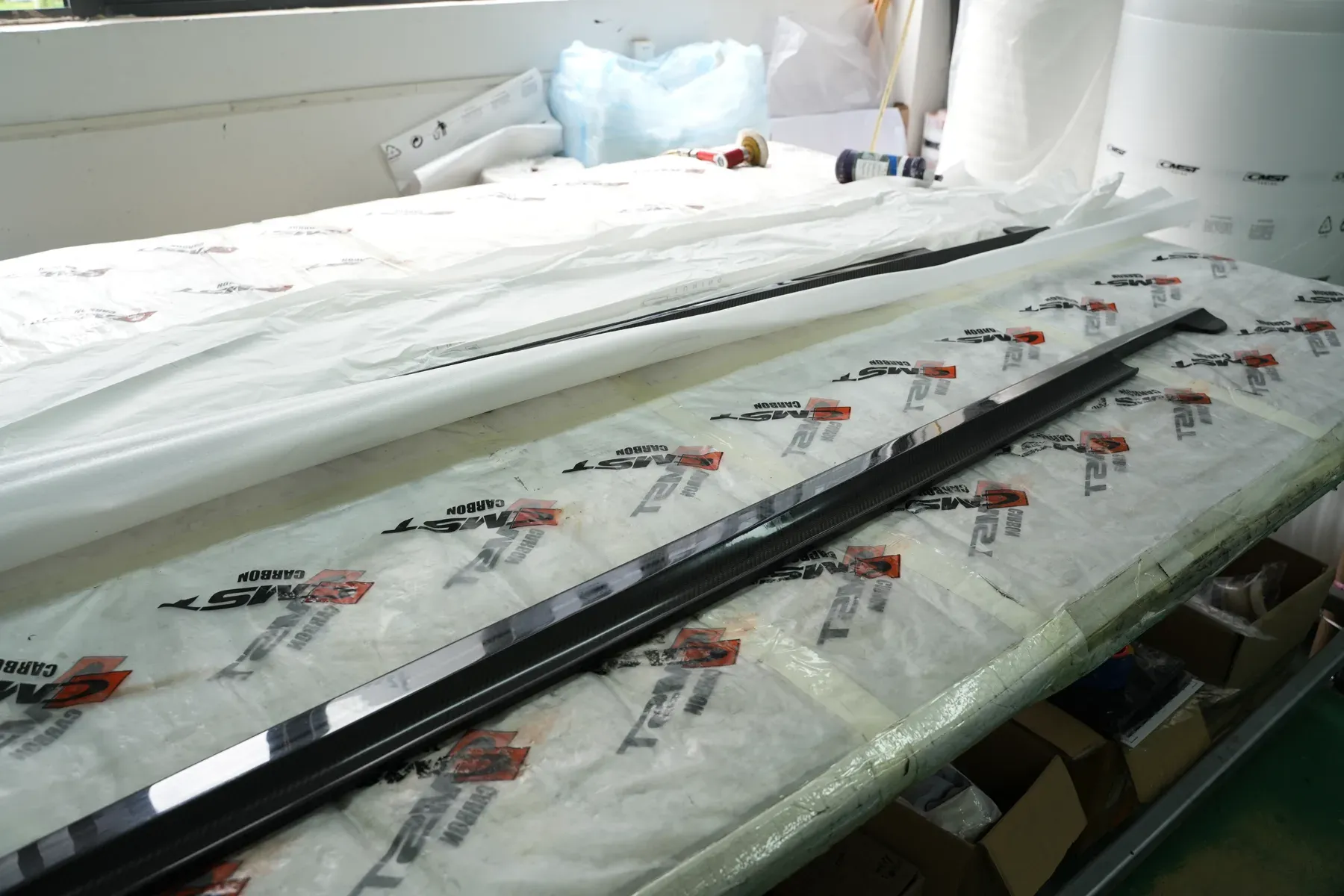
The sequence at CMST starts from the car itself. Each mold is taken from the vehicle's own body surface, a full-size master is 3D printed and trial-fitted on a real car, and the first production part is fitted again before the batch ships — the stage where a gap is still cheap to correct.
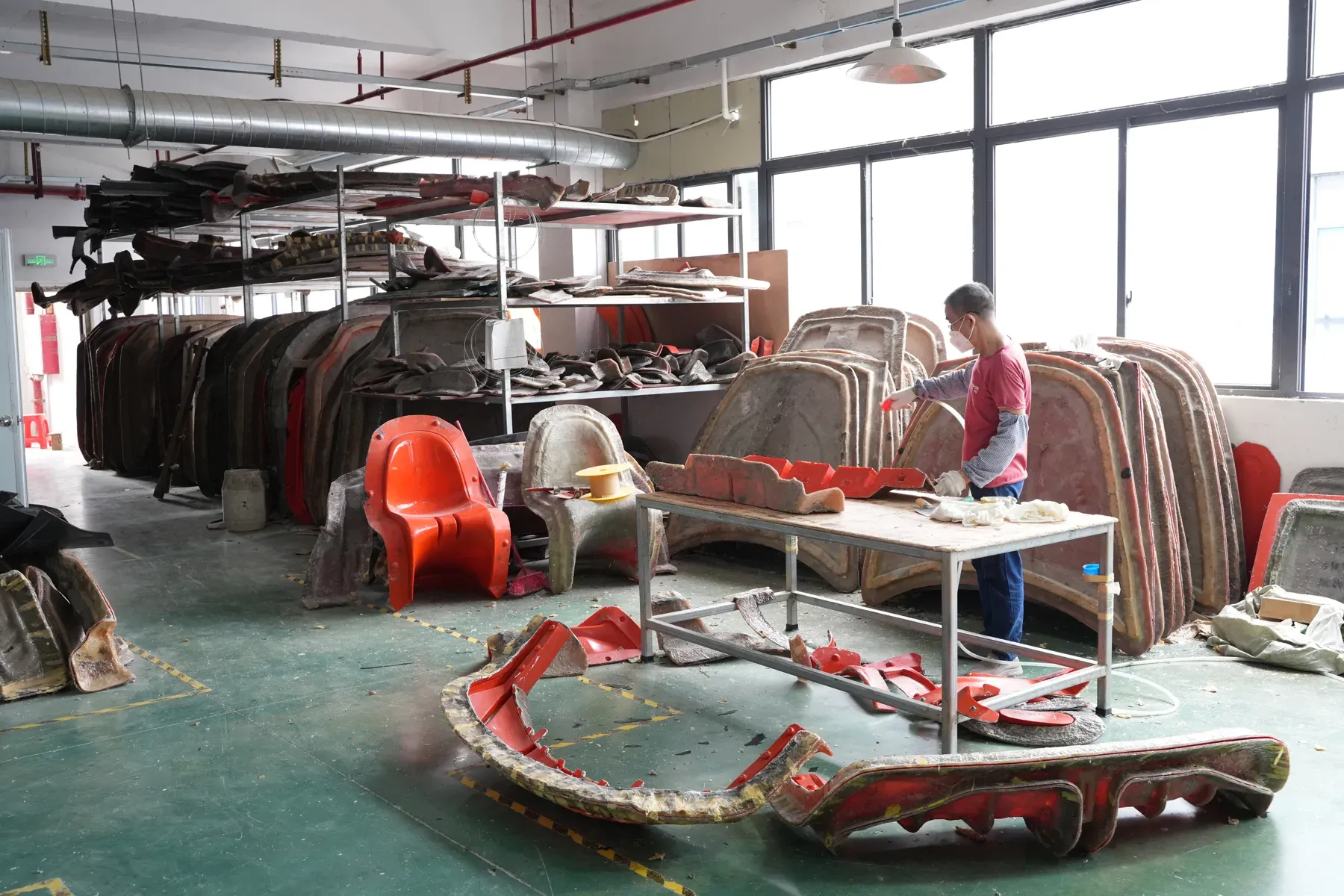
A kit is quoted as one part number covering the panels listed for that vehicle, in the grades that part is tooled in, with hardware and fitting instructions included and installation videos available for most vehicles. Standard lead time runs 7–20 days, minimum order is one piece, and parts from a set can be ordered on their own.
That last point is the practical answer to the question this article opened with. You are not buying "a body kit" in the abstract. You are buying a named list of panels for a named vehicle, in a named material, and the quality of the purchase is decided by how precisely that list is written.
Short Answers
What is a body kit? A set of exterior parts fitted to a car to change its shape and its aero — bumper covers, side skirts, lips, diffusers, spoilers, arch extensions, sometimes fenders and a hood. It is a group of parts rather than a standardized product, so contents vary by seller.
What are the main types? Lip kits and other add-on aero, bumper or ground-effects kits that replace the covers, full kits that cover most of the lower body, and widebody conversions that change the car's width — the last being the one that usually involves cutting.
What does a full body kit include? Whatever the seller's piece list says. Typically the bumper covers, side skirts and rear trim; commonly excluded are the hood, lamps, grilles, exhaust surrounds, wheels, paint and fitting.
Is a body kit the same as a widebody kit? No. A widebody kit is a body kit whose purpose is width, usually through arch flares or replacement quarter panels. Every widebody is a body kit; most body kits are not widebody.
Does a body kit add power? No. It changes appearance, and can change airflow — a splitter, diffuser or wing is there to manage air, not to make torque. Expect the aero claim to be modest unless the part was developed with measured data.
Can a body kit be removed? Add-on parts usually can, which is why lip kits are the low-commitment route. Replacement covers, painted panels and anything bonded or cut cannot be returned to standard without the original parts and a paint match.
Next step
Send the vehicle, the parts you are considering and the finish you want — we reply with fitment notes and a quote.
Send an inquiryKeep reading
Related notes
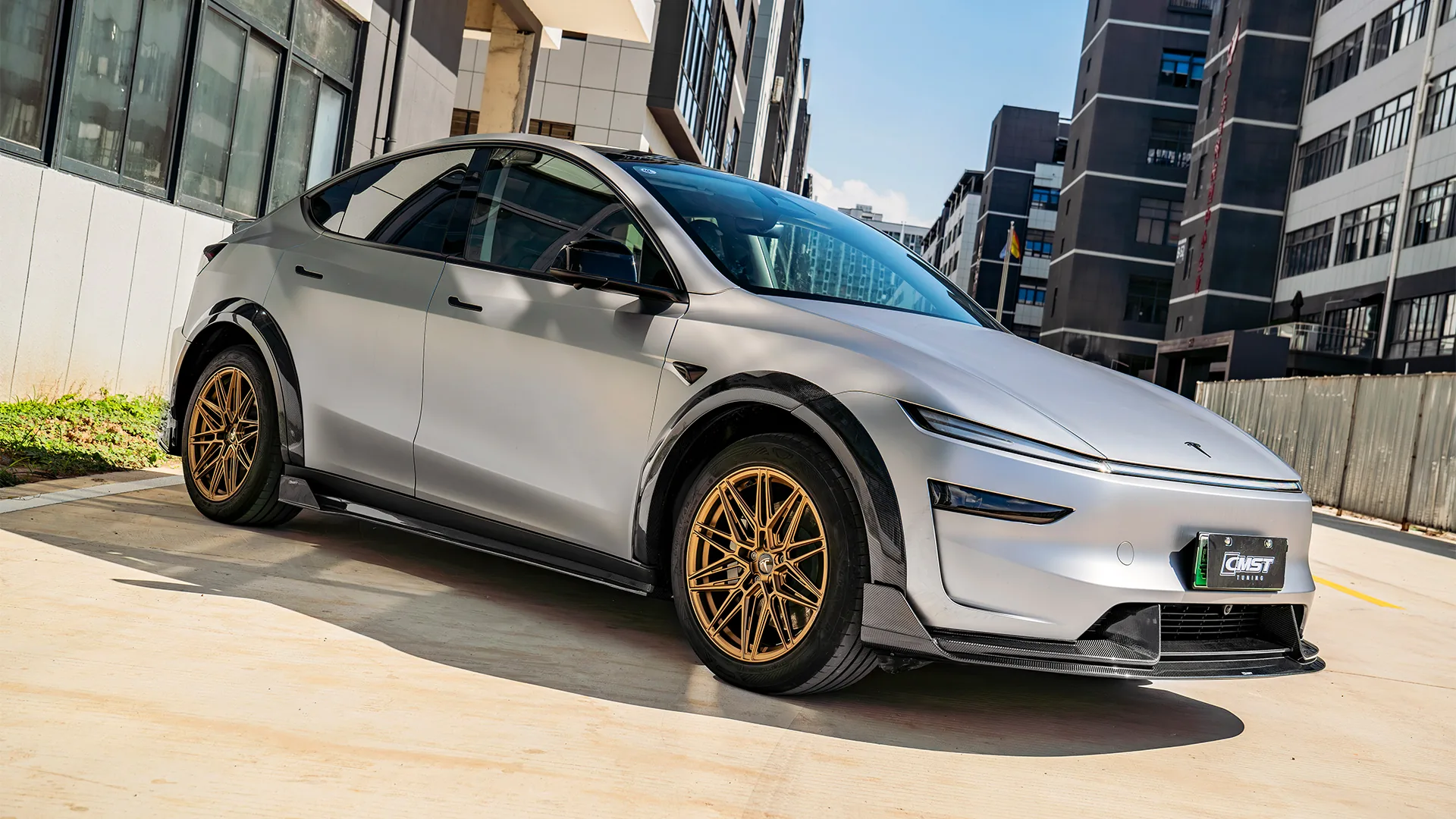
What Is a Widebody Kit? A Beginner's Guide
A widebody kit widens a car's arches so wider wheels and tires will fit. Here's what is in one, what gets cut, and how to tell if a wide build suits your car.
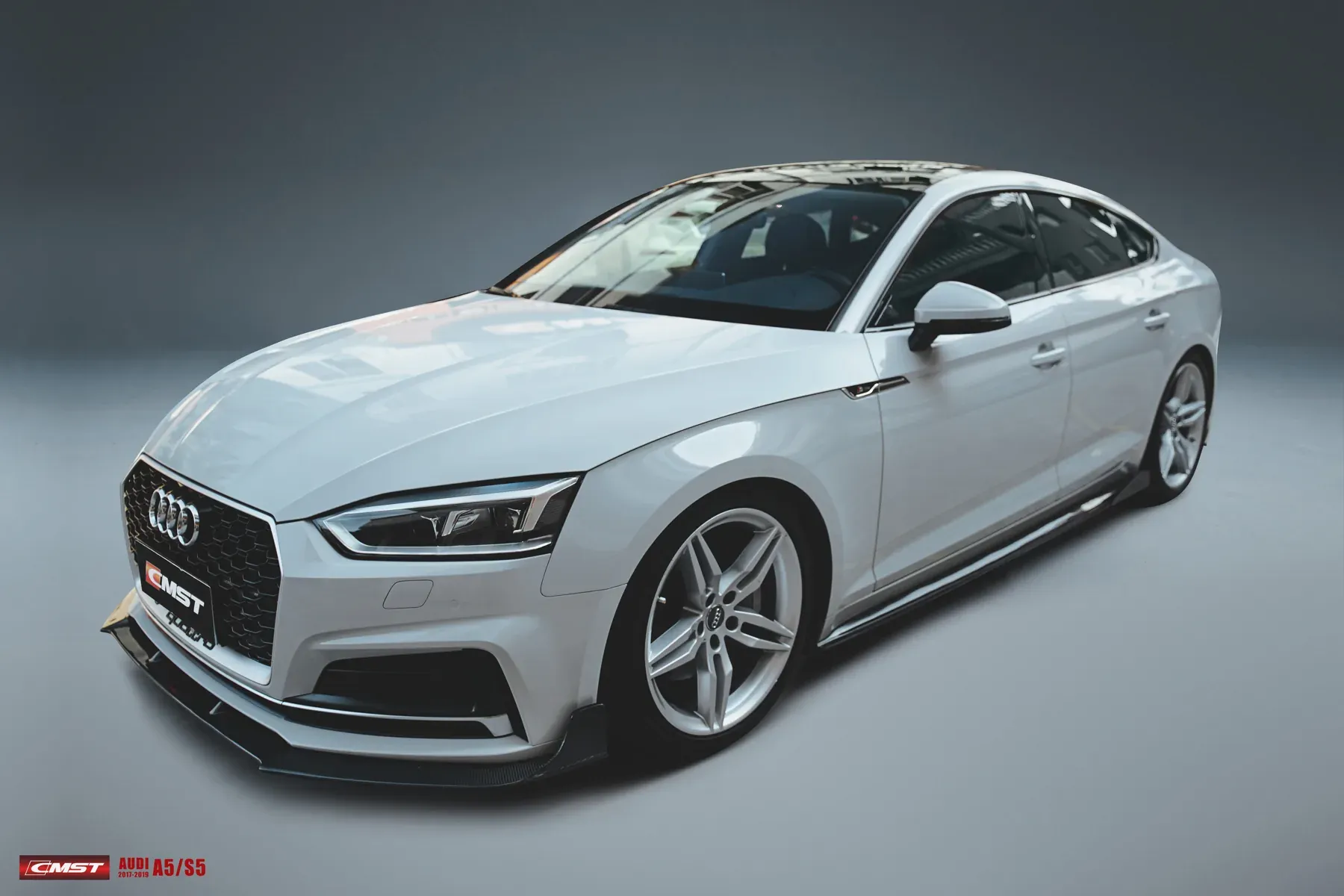
What Is Fitment? Panel Gaps and Trial Fits
Fitment is how well an aero panel agrees with the car: the gap, the flush and the contact pattern, measured on a real car — not promised by the word bolt-on.
Is Dry Carbon Worth It on a Street Car?
Dry carbon is worth the premium on the panels you look at and lift, not on the parts that get hit, painted or replaced. Here is where the money actually goes.