
Dry Carbon vs Wet Carbon: Is the Upgrade Worth Paying For on Street Cars?
Dry carbon is worth the premium on the panels you look at and lift, not on the parts that get hit, painted or replaced. Here is where the money actually goes.
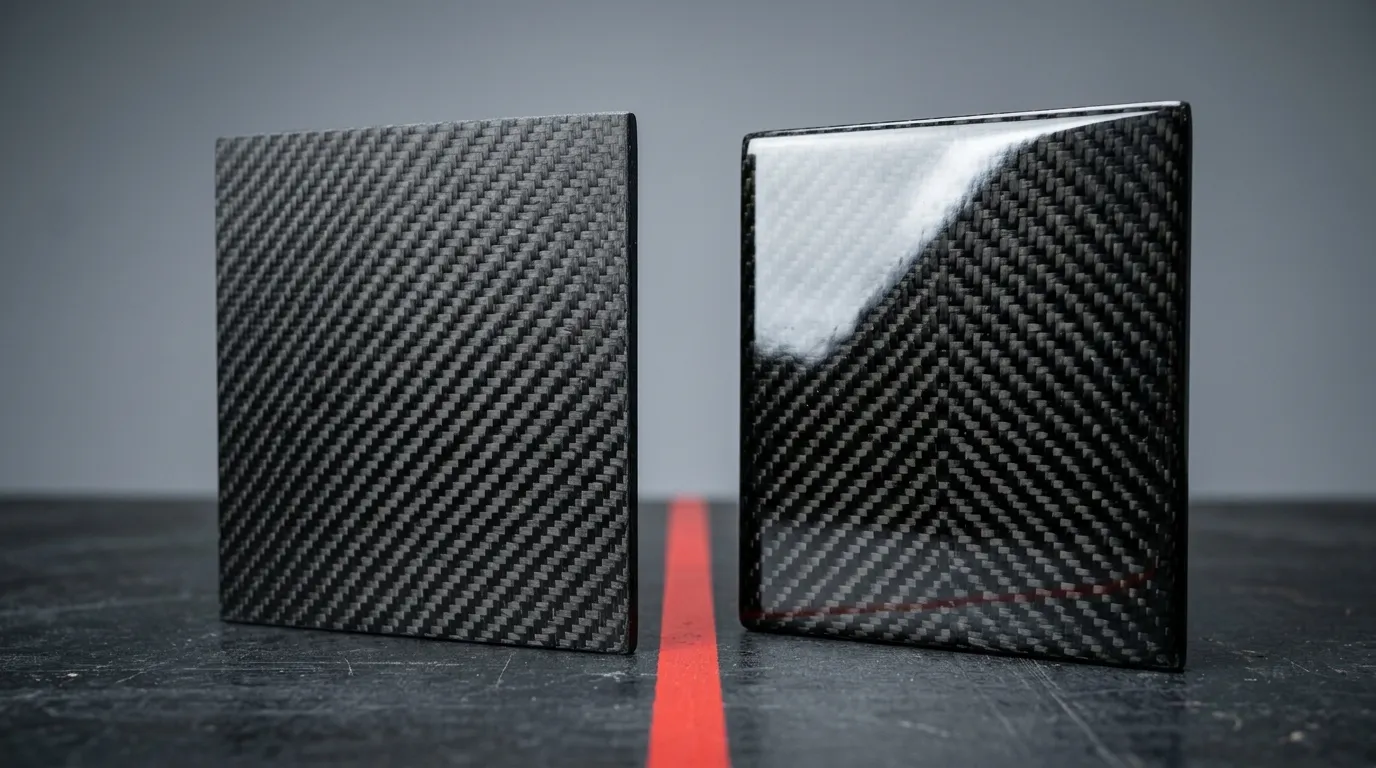
Is dry carbon worth it on a street car? On about four parts, yes — and on the rest it is money you will never see again. It earns its premium where the panel is looked at bare, lifted by hand, or hung out in the airflow: a hood, a trunk lid, a wing, a diffuser. It stops earning it the moment the part is going to be painted body color, is going to meet a curb or a stone, or is going to be replaced after the first winter. The premium is not buying "stronger carbon". It is buying control of the resin ratio — and control only shows up in things you can see, lift and measure.
What You Are Actually Paying For
A lot of arguments about dry carbon happen between two people using different words for the same two things. Dry carbon is prepreg: carbon cloth arrives from the supplier already impregnated with resin at a fixed ratio, is cut and laid into the mold by hand, and cures under heat and pressure. Vacuum carbon — what the trade usually calls wet carbon — has the resin applied during lay-up, then gets bagged, evacuated and cured at temperature, and leaves the mold needing a gloss clear coat. Our own breakdown of the five material grades sets them beside FRP, ABS and PP if you need the whole ladder; what matters here is the one step between the two carbon grades.
That step buys three things.
A resin ratio that does not depend on the person holding the brush. In wet lay-up, resin content typically varies about ±5.0% across parts; prepreg holds it to roughly ±2.0% (CompositesWorld). Same mold, same cloth, different discipline — and it lands in weight and in how flat the panel sits.
Fewer voids. Aerospace-grade laminates come in around 1% void content while other composite work commonly runs 3–5%, and going from 1% to 3% voids can cost about 20% of a laminate's mechanical properties (CompositesWorld). Voids are air that stayed in the laminate; heat and pressure are how it comes out.
Fewer finishing hours. A part that leaves the mold already looking like the finished surface skips the fill, sand, prime and polish cycle. You pay for that labor either way — as material cost on a dry part, or as shop time on a vacuum carbon one.
What the money buys | Dry carbon | Vacuum carbon | Does a street car feel it? |
|---|---|---|---|
Resin content control | ±2% typical | ±5% typical | Yes — as weight and panel flatness |
Void content | Near aerospace levels when the cure is right | 3–5% typical | Rarely as a failure; often as surface work |
Surface out of the mold | Finished weave under clear | Needs clear coat and polish | This is the whole point on a bare part |
Consumables and rework | Prepreg is scrap if it goes out of date | Resin is mixed per job | Yes — but as a price, not a feature |
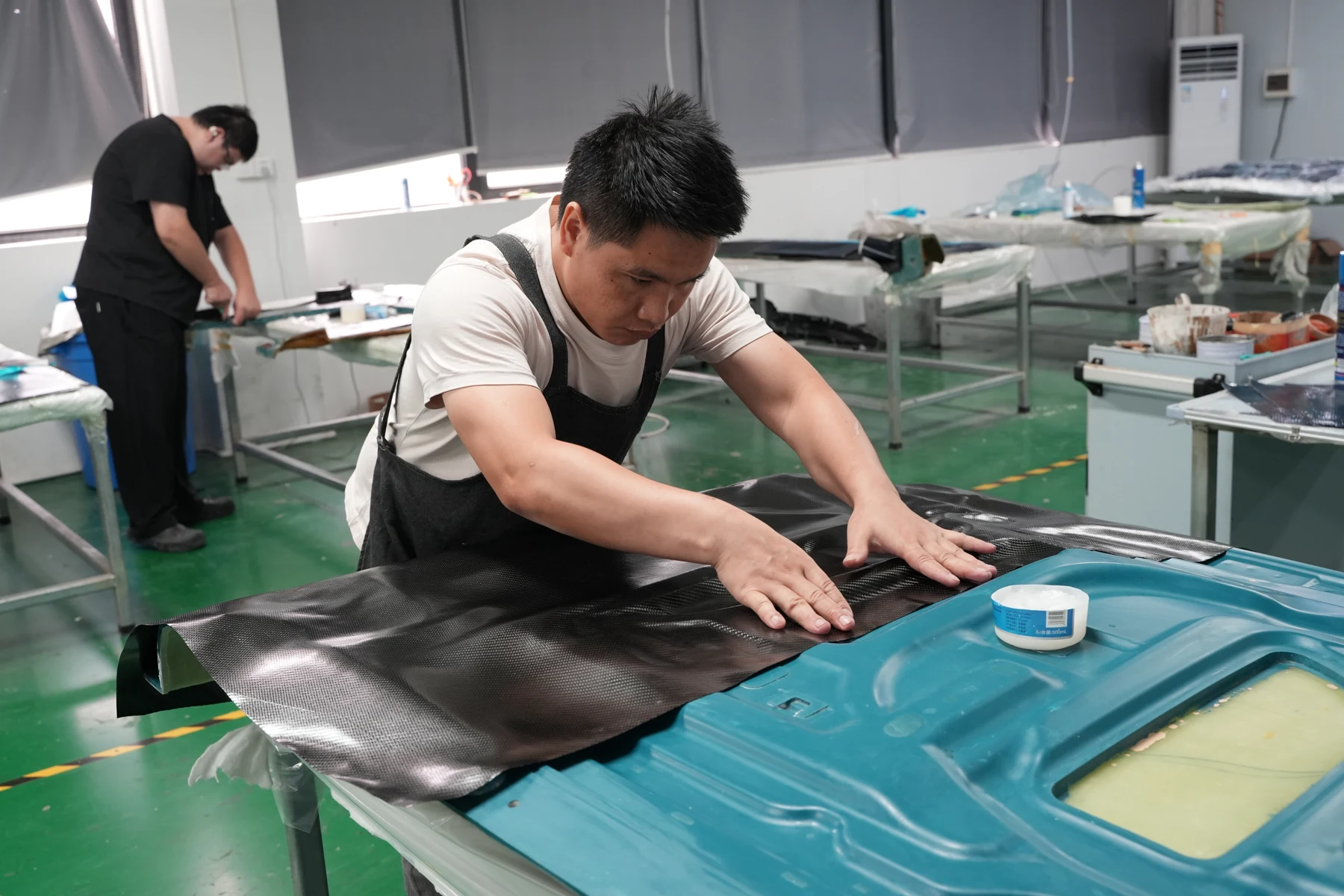
Lay-up is hand work in both grades: the cloth goes into the mold ply by ply, and position decides everything that follows.
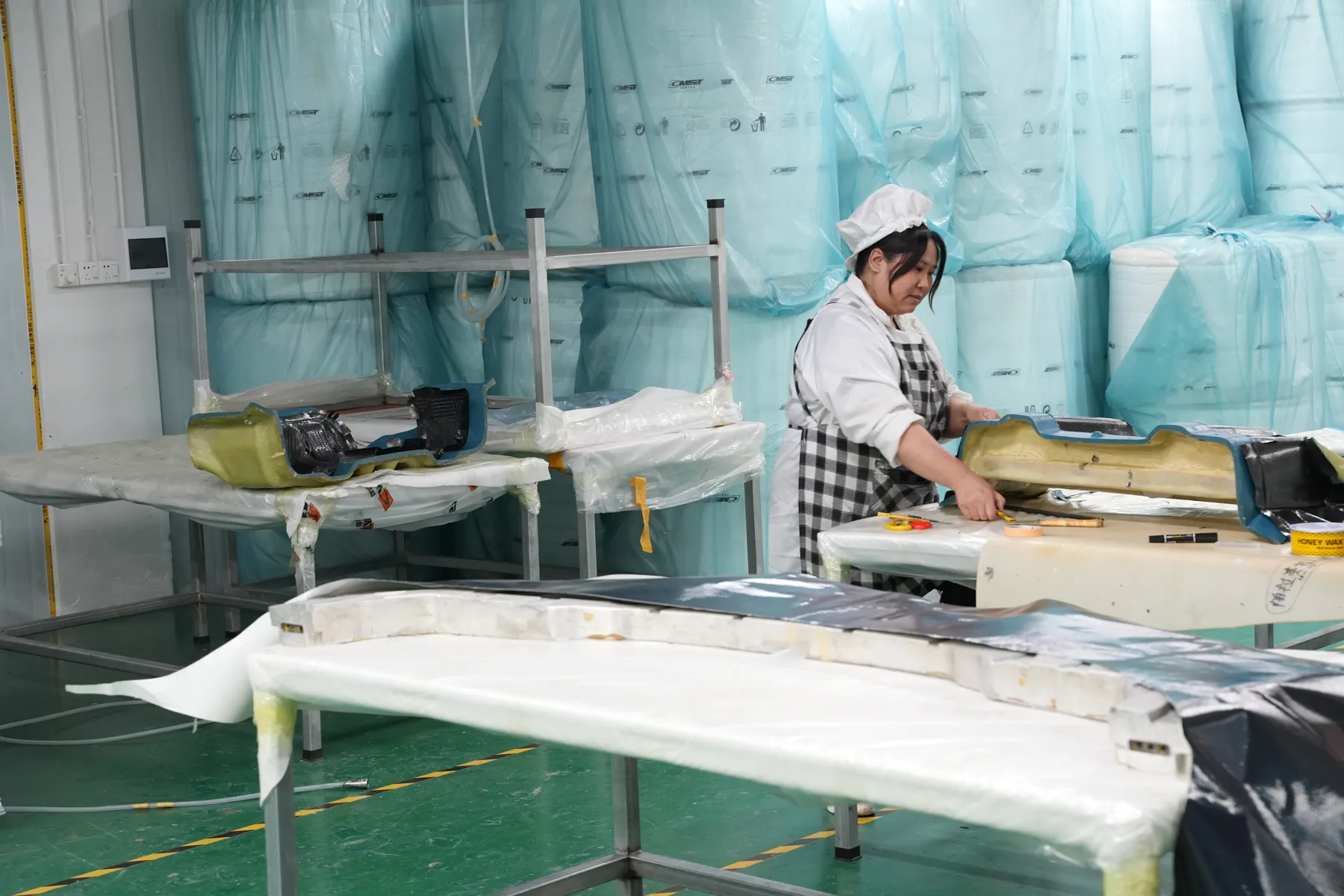
Bagged parts on our cure queue. What separates the two carbon grades happens in the next few hours, not in the cloth you can see here.
Why Is Carbon Fiber So Expensive? Follow the Money
To judge whether you are being charged for the right thing, look at what the seller has to own in order to make the part. Five lines carry almost all of the difference.
The prepreg itself. It has to be stored cold, thawed on a schedule and used inside its out-life. Material that misses the window is scrap before it touches a mold. Dry fabric and a drum of resin do not have that problem.
The cure equipment. The cure vessel is the expensive part of the building: capital-intensive, costly to run because of the energy, limited in the size of part it can take, and slow enough that labor sits waiting on it. An autoclave is the top of that range — the aerospace route. A heated vacuum vessel that seals the part and holds it under vacuum through the cycle costs a fraction of one, which is why most carbon body parts in the world are not cured in an autoclave. Either way, what the premium buys is a controlled, recorded cycle — a temperature ramp plus vacuum or pressure — not the vessel's name.
The labor. Every ply goes in by hand with no second attempt. Ply direction and overlap are decided while the part is open, and a bad lay-up is not rescued by a better clear coat later.
The finishing. A vacuum carbon part needs clear coat and polish to look like carbon. A dry carbon part needs a coat to protect a weave that is already there. Different jobs, different failure modes.
The scrap rate. Prepreg cut wrong, bagged wrong or cured wrong is a total loss. Wet lay-up wastes cloth and resin, but not the whole kit.
Cost line | Dry carbon | Vacuum carbon | Where a street car notices |
|---|---|---|---|
Material | Higher, with cold-chain waste | Lower, mixed per job | Price only |
Equipment | Controlled cure vessel, energy, scheduling | Vacuum bag and oven | Price only |
Labor | Skilled lay-up, one shot | Skilled wet-out, more finishing | Price, and surface consistency |
Finishing | Protective clear over a finished weave | Clear coat and polish to reach the look | Visible on a bare part |
Scrap | Expensive failures | Cheaper failures | Price |
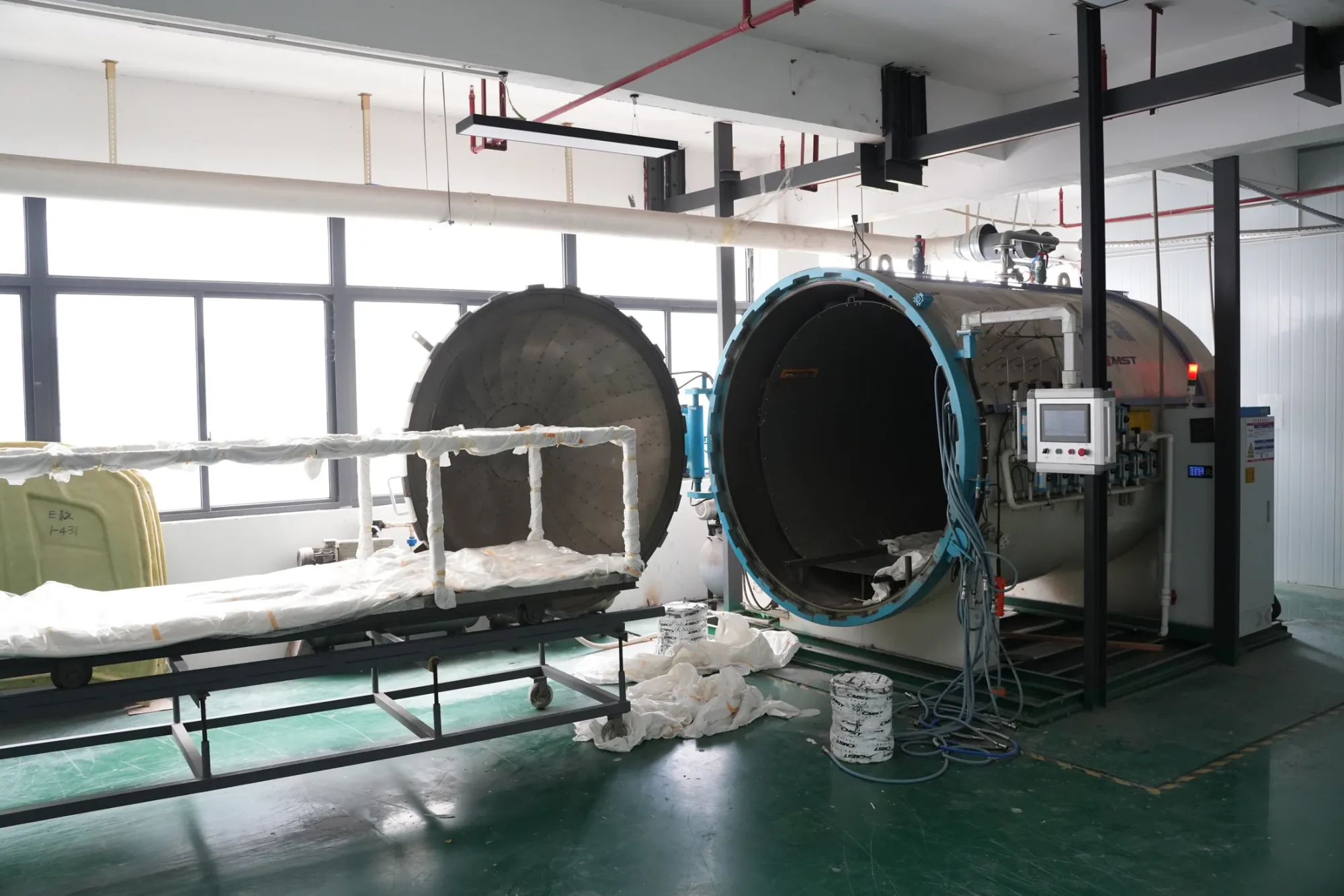
This is the cure equipment the premium pays for — and the part of it that does nothing for a painted bumper shell.
The uncomfortable conclusion for both sides of the argument: most of the premium is equipment and process discipline, not carbon. Which is why a part described as dry carbon by a shop with no controlled cure vessel, no cold storage and no cure records is a label, not a grade — and why the word on an invoice tells you less than a photograph of the back of the part.
Surface porosity is the visible version of the same problem. It opens up at the weave intersections when the bagging or the lay-up lets resin pull away from the cloth, and no amount of polishing fixes a laminate that cured with air in it (CompositesWorld). Two parts from the same mold can differ this way; the mold is not the variable.
What the Difference Measures Out To
Marketing pages compare processes. A test coupon compares laminates, and the gap is wider than most buyers expect.
A European composites research programme measured both routes on the same 8-ply plain-weave carbon construction (CERTBOND project poster). The wet, vacuum-bagged laminate came out 2.8 mm thick with 32% fiber volume and 4.8–6.8% void content. The autoclave prepreg laminate came out at 2.05 mm, 44% fiber volume and no measurable porosity. Tested to failure, the wet laminate reached 76% of the tensile strength, 58% of the compressive strength and 68% of the flexural strength of the autoclave part — which was also the more brittle of the two under impact.
Two things follow, and they pull in opposite directions.
The process difference is real and measurable: more fiber in the same space, less air, thinner part, more strength per gram. If you are buying something structural, that is the whole argument.
And a bolted-on body panel is not a test coupon. Exterior aero parts are not loaded to failure in service; they are loaded by a car-wash brush, a stone, a curb and a door in a parking lot. As our own materials page puts it, on a body panel the difference a driver notices is weight and surface, not strength. Both statements are true at once, and this article exists because most pages pick one and drop the other.
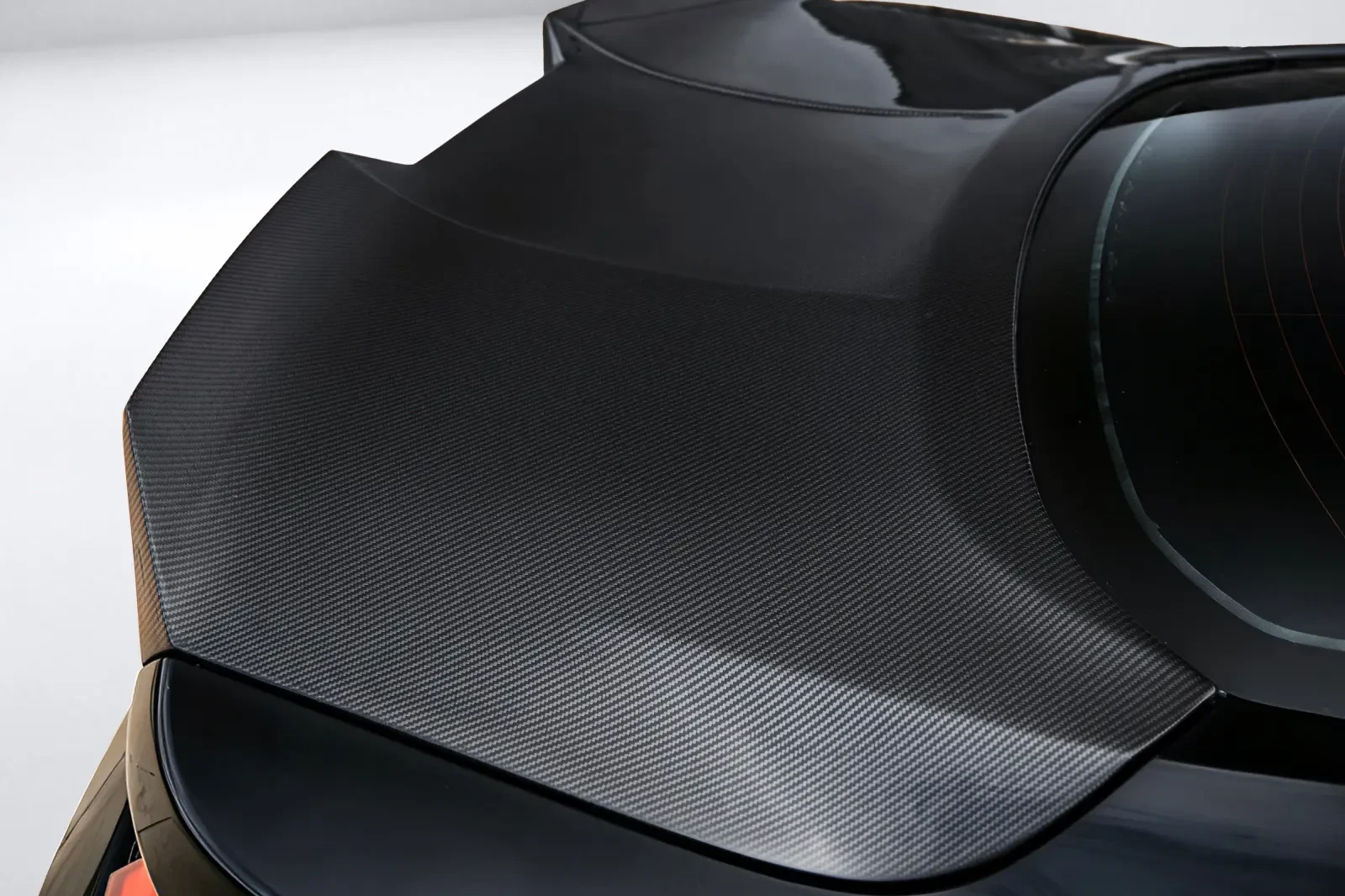
What the premium looks like when it is working: the weave is the surface, not a pattern applied over one.
On carbon fiber weight savings, the honest version: the grams you save depend on the part, not the label. The saving comes from resin fraction, so it scales with panel area and ply count. On a hood or a trunk lid you feel it with one hand every time the car is serviced. On a side skirt it is a few hundred grams, and the rest of the carbon fiber guide will tell you where else the material earns its keep.
Three Questions That Settle Whether Dry Carbon Is Worth It
Forget grade names for a minute. Three questions decide almost every part on a street car, and all three are about the car rather than the material.
Will it be looked at bare? If the part is going to be painted body color, stop. You would be paying for a weave and then covering it, and the money is better spent on fit and finish.
Will it get hit? The lower a part sits, the likelier it is to meet a speed bump, a steep driveway or a curb. Dry carbon is stiff and fails by cracking rather than flexing, so the most exposed panel is the worst candidate for the most expensive material.
Will you have to do it twice? A part that gets replaced after the first bad winter, or that leaves with the car, is not a part to spend the premium on. A part that defines the car and stays on it for years is.
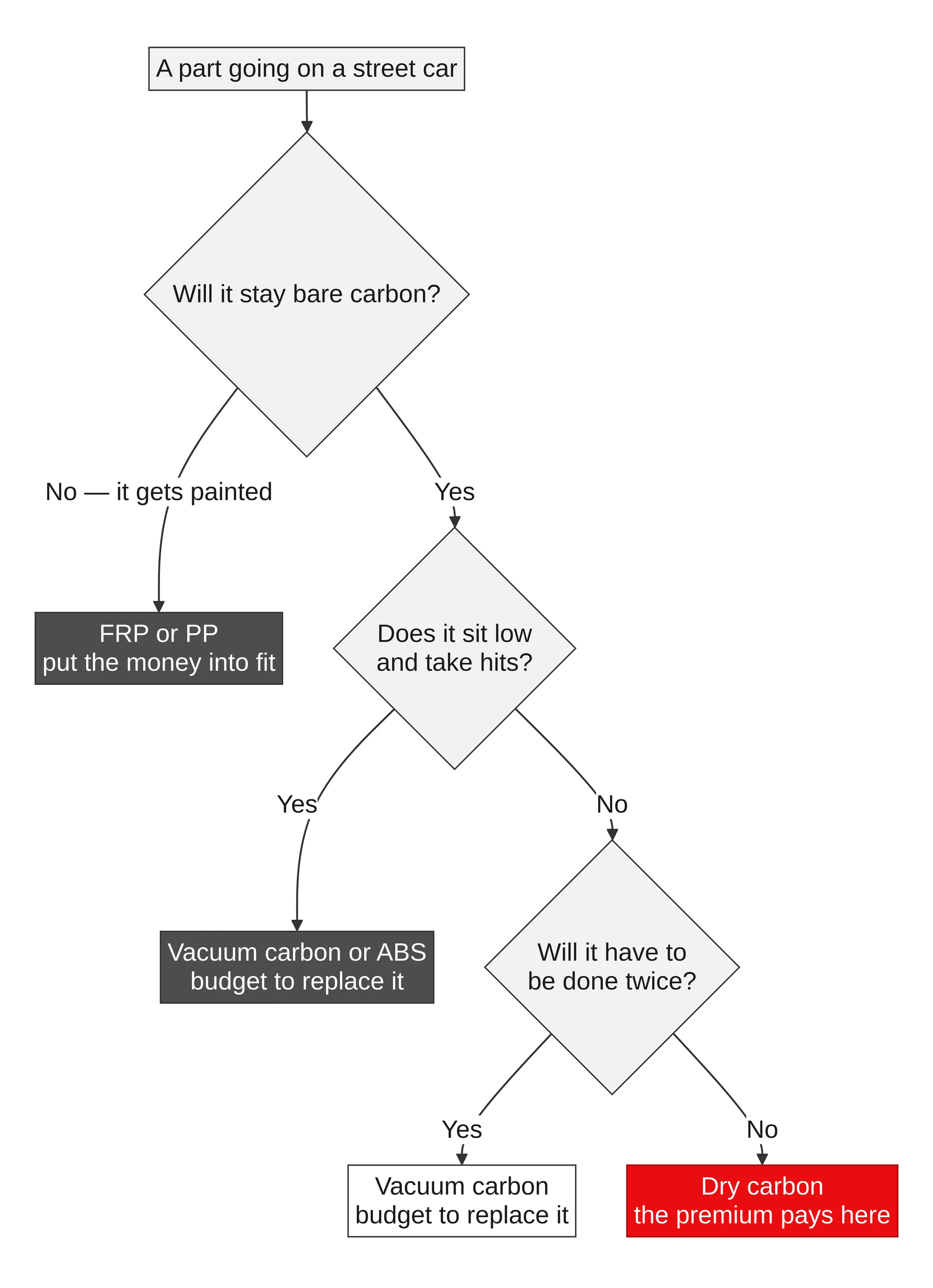
The same three questions as a decision tree. The red box is the exit most street cars should take — and the one they most often skip.
Part by Part: Where the Premium Earns Its Price
Walk the kit instead of the catalog. These verdicts are about material only — gaps and mounting points are a separate subject every part has to pass regardless of grade.
Part | Verdict | Why |
|---|---|---|
Hood / trunk lid | Dry carbon, if it stays bare | Large panel, lifted often, read at eye level. The weight saving is real and the weave is the point. |
Rear wing | Dry carbon | Stiffness under load is what the part is for, and weight at the extremity helps. |
Rear diffuser | Dry carbon | An aerodynamic surface looked at directly. The weave is doing design work. |
Front lip / splitter | Vacuum carbon or ABS | The most damage-prone panel on the car. Spend on fit, not on grade. |
Canards | Vacuum carbon | Small, cheap to replace, and the weight difference is negligible. |
Bumper shells | FRP or PP | Painted body color anyway; the grade buys nothing a driver can perceive. |
Side skirts | FRP or vacuum carbon | Long, low, exposed to curbs, usually painted or replaced. |
Arch / fender sets | FRP, dry carbon only for show builds | Big painted surface; the premium is a show-car decision, not a street-car one. |
Two notes on that table. Mixing grades inside one kit is normal, not a compromise: an FRP shell with a dry carbon lip, canard and diffuser is how most well-judged street builds are specified, because it puts the expensive material where a buyer can see and feel it. At CMST we run both grades on the same line, so which grade a part is quoted in is decided part by part, not kit by kit. And a stiff dry carbon panel holds its shape, so it will show a bad gap rather than being persuaded into place — which is why trial fitting on the actual car matters more, not less, when you move up a grade. If your part is a hood, the hood range lists what is available per vehicle and in which grade.
What Ownership Adds: Costs Nobody Quotes You
The purchase price is the visible half of the decision. The other half arrives over three or four years, and that is where most "was it worth it" answers are really decided.
The clear coat is a wear item. On a bare carbon part the coating is the only thing between UV and the resin underneath. Yellowing is a coating and resin problem rather than a fiber problem, it can be slowed with proper protection and it can be refreshed — but a part that lives outdoors needs more of that attention than one that lives in a garage.
Damage does not disappear. A painted FRP panel can be repaired and refinished until the repair is invisible. A bare carbon panel cannot: weave direction and clear coat have to match, and the repair reads from a meter away. On a part that will meet a curb, that is an argument for the cheaper material, not a footnote.
Carbon and bare metal do not get along. Carbon is conductive, and bolted against bare aluminum or steel it can drive galvanic corrosion of the metal. Good composite work puts a barrier ply at that interface; expect a supplier to know that without being told.
The grade is hard to prove later. Nobody looking at your car in three years can tell a well-finished vacuum carbon part from a dry carbon one across a parking lot. If resale matters, keep the specification paperwork — the invoice and the grade outlast the weave when the car changes hands.
Stone chips are the street-car failure mode. A track car meets cones on purpose; a street car meets gravel at 70 mph with no warning. On a painted part that is a paint repair. On a bare carbon lip it is a permanent mark on the surface you paid extra to expose.
When the Cheaper Grade Is the Right Answer
There are builds where dry carbon is simply the wrong purchase, and it is worth saying so plainly.
If the part will be painted, buy FRP and put the money into fit. An FRP versus carbon comparison on a painted bumper comes out the same way every time.
If the part sits low and takes hits, buy vacuum carbon or plastic and budget for replacing it. A cracked dry carbon splitter is an expensive lesson in exactly the failure mode carbon is known for.
If you are a shop stocking for customers, the volume grade is what most of them will actually buy, and dry carbon on the shelf ties up cash in slow-moving stock. Quote both and let the customer choose the split.
If this is your first build, vacuum carbon gets you the look at a price that leaves room for wheels, tires and suspension — the parts that change how the car drives rather than how it looks standing still.
And if the honest reason you are considering dry carbon is that it is the more expensive option and therefore the better one, that is a reason to buy a well-fitted vacuum carbon part instead.
FAQ
Is dry carbon actually stronger than vacuum carbon?
In a laminate test, yes — the coupon data above shows a clear gap. On a bolted-on exterior panel, what you notice is weight and surface, not strength. If the part is structural, the process matters a great deal; if it is cosmetic, it matters far less than the quality of the mold.
Why is carbon fiber so expensive in the first place?
Four reasons, and only one of them is the fiber: prepreg costs more and expires, the cure equipment is capital-intensive, every ply is laid by hand, and a failed part is a total loss. The finish adds a fifth.
How much lighter is a dry carbon part?
There is no universal number, and a page that gives you one is guessing. The saving comes from resin fraction, so it scales with panel area and ply count — meaningful on a hood or trunk lid, negligible on small trim. Ask for the weight of the specific part in both grades; a supplier who makes both should be able to tell you.
Can you tell dry carbon from vacuum carbon by looking?
Up close, usually. Turn the part over: a real carbon part is carbon on both faces, with visible laminate and no plain plastic back. Then look at the weave under the coating — on a dry part it sits tight and flat, and the surface is the material rather than a layer over it. From three meters away in a parking lot, most people cannot tell, and that is worth remembering before you pay the difference.
Does the expensive grade hold its value?
Only with paperwork. The market pays for condition and provenance, not a claim made in an advertisement. Keep the specification, keep the invoice, and photograph the part before it goes on the car.
If you would rather judge the difference on a finished car than in a table, the build gallery is the honest test: find a car like yours, look at the parts you were considering, and decide whether that surface is worth the money to you.
Next step
Send the vehicle, the parts you are considering and the finish you want — we reply with fitment notes and a quote.
Send an inquiryKeep reading
Related notes
Carbon Fiber vs Fiberglass Body Kits
Carbon fiber or fiberglass for a body kit? Part by part: carbon earns its price on hoods, wings and diffusers; FRP and molded plastic win on bumpers and arches.
Buying Direct From a Manufacturer: The Catch
Buying direct from a manufacturer swaps a distributor's margin for its work: stock, fitment answers, support. What a dealer takes on, and how to test it.

How Are Body Kits Made? From 3D Scan to Mold
A custom body kit is a fit problem before it is a design problem. Eight stages, from scanning the car to cutting the mold, decide whether it fits at all.