
How CMST Compares With Trading Companies: The Manufacturer Difference
A trading company can quote like a factory. Five checks - mold ownership, fitment answers, custom programs, remedies, cost - and where CMST stands on each.
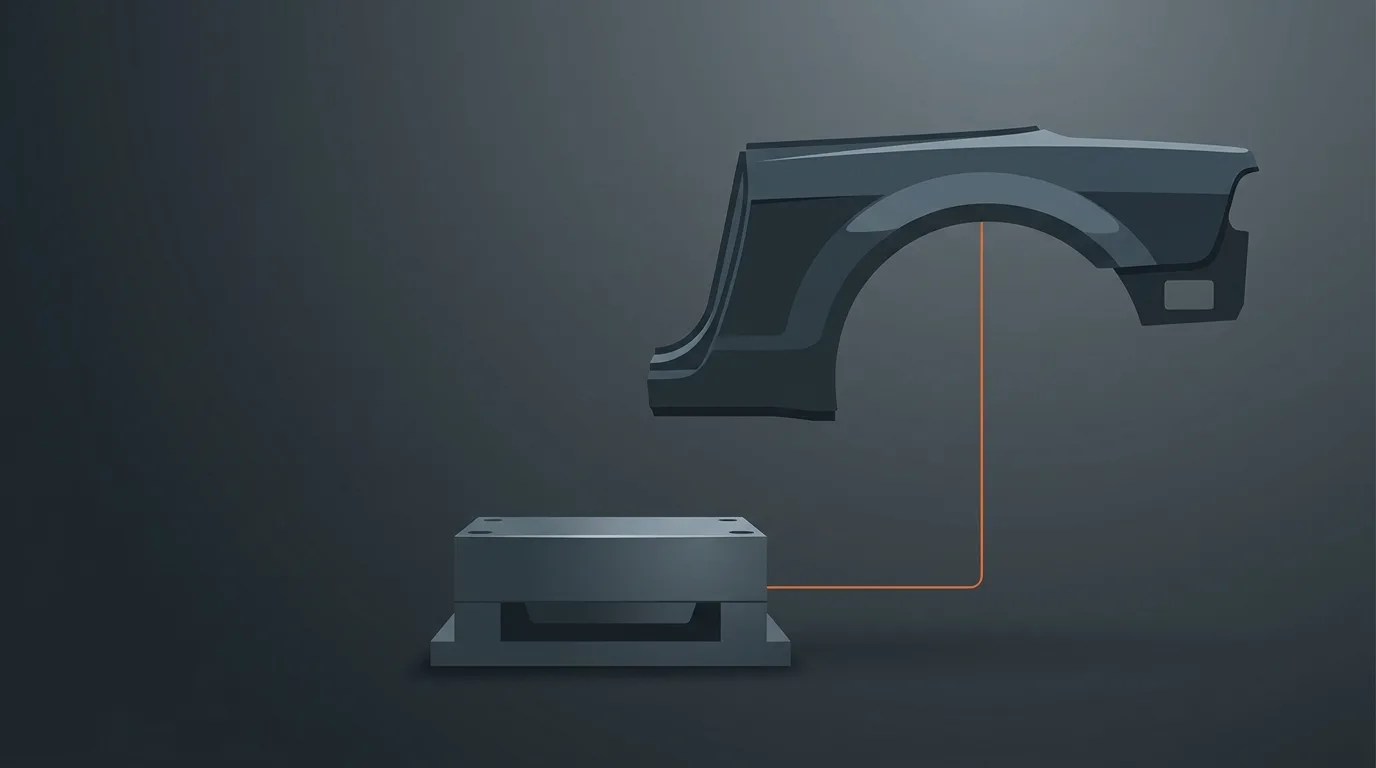
A trading company can send you the same quotation a factory can. Same part number, same photographs, often the same delivery window — because the numbers came from the same place: a factory the trading company buys from.
Which means the useful version of the supplier vs manufacturer question is not "which one is better". It is: when something about this part has to change — a fit that is off, a batch that arrived wrong, a shape that exists on your customer's car and nowhere in the catalogue — who is able to do something about it, and what does that cost you in weeks?
This article is written from inside a factory. CMST has been in business since 1993 and has been building carbon aero parts since 2011, so we are not neutral here, and the last third of what follows is about us. Read the first two-thirds as five tests you can run on any supplier, including this one. The section on when a trading company is the better call is the one to hold us to.
Supplier vs Manufacturer: The Question Behind the Question
The definitions are not the hard part. A supplier sells you goods; a manufacturer makes them; a trader is a supplier that does not make what it sells. That fits on one line and helps nobody, because a trader's catalogue, photographs and quotation look exactly like a manufacturer's.
What separates the two is not what they do. It is what they can still do after you have paid. Two capacities follow from that, and everything else is downstream of them.
Tooling. Somebody owns the mold the panel came out of. If that somebody is the company answering your email, they can run it again, alter it, or walk you past it. If it is not, the best they can do is ask.
Engineering. Somebody has to decide whether a 4 mm gap is a mold problem or a trim problem. That decision changes what you do next, and it gets made by a person who has seen the tool.
Price, lead time, catalogue size and reply speed can all be imitated, and often are. Molds and engineers are harder to fake — which is why the five tests below are built around them.
Three Businesses Can Send You the Same Quotation
Most suppliers sit in one of three shapes. All three are legitimate businesses; only one of them can answer for the tooling.
The pure trading company buys finished parts from several factories, holds no tooling, and is paid for consolidation and paperwork. Its margin is real work, and the next section on when to hire one is not a courtesy.
The pure manufacturer makes the part, owns the mold, sells what it makes, and usually only what it makes. You will feel that limitation the first time you want aero and wheels on one invoice.
The hybrid is the most common shape and the least discussed: a factory with an export department selling itself as a trader, or a trading company with a small finishing shop and a stake in a partner factory. Many carbon shops that market themselves as manufacturers are hybrids. So are many that call themselves traders, and own half the equipment.
What you are buying | Owns the mold | Answers technical questions | Can change a design | |
|---|---|---|---|---|
Trading company | Consolidated goods and documents | No | Relays to a factory | No, it re-quotes |
Manufacturer | A part from its own tool | Yes | Yes, in-house | Yes, at mold cost |
Hybrid | Usually a part, sometimes a service | Sometimes | Partly | Sometimes |
None of these rows says "worse". The failure mode is not buying from a trader. It is buying from a trader while believing you are buying from a factory, and discovering the difference at the moment you need a change.
Test 1: Who Owns the Mold
A mold for a front bumper or a wide arch is not a file. It is a physical object that costs money to cut, takes weeks to make, and occupies floor space for years — tooling board, the material a mold is built from, is a production cost line in its own right, not a formality (CompositesWorld on tooling boards). A company holding hundreds of them is holding capital it cannot hide behind a website. A factory that makes only one family of parts also tends to catch a bad tool earlier, because the mold is its daily work rather than a one-off job for a customer it will not see again.
Three questions, in this order:
- How many molds do you hold? A manufacturer answers with a number and a category. A trader answers with a range that sounds large and slightly poetic — "over a thousand across our partner factories".
- Can I see them? Not a photo set. A live call walked through the tool store, because borrowing a warehouse photograph is the easiest thing in this industry.
- If this mold has to be re-cut because the fit is wrong, who pays? The useful answer names a party and a condition. "We will handle it" means somebody upstream will decide, and that somebody is not in your conversation.
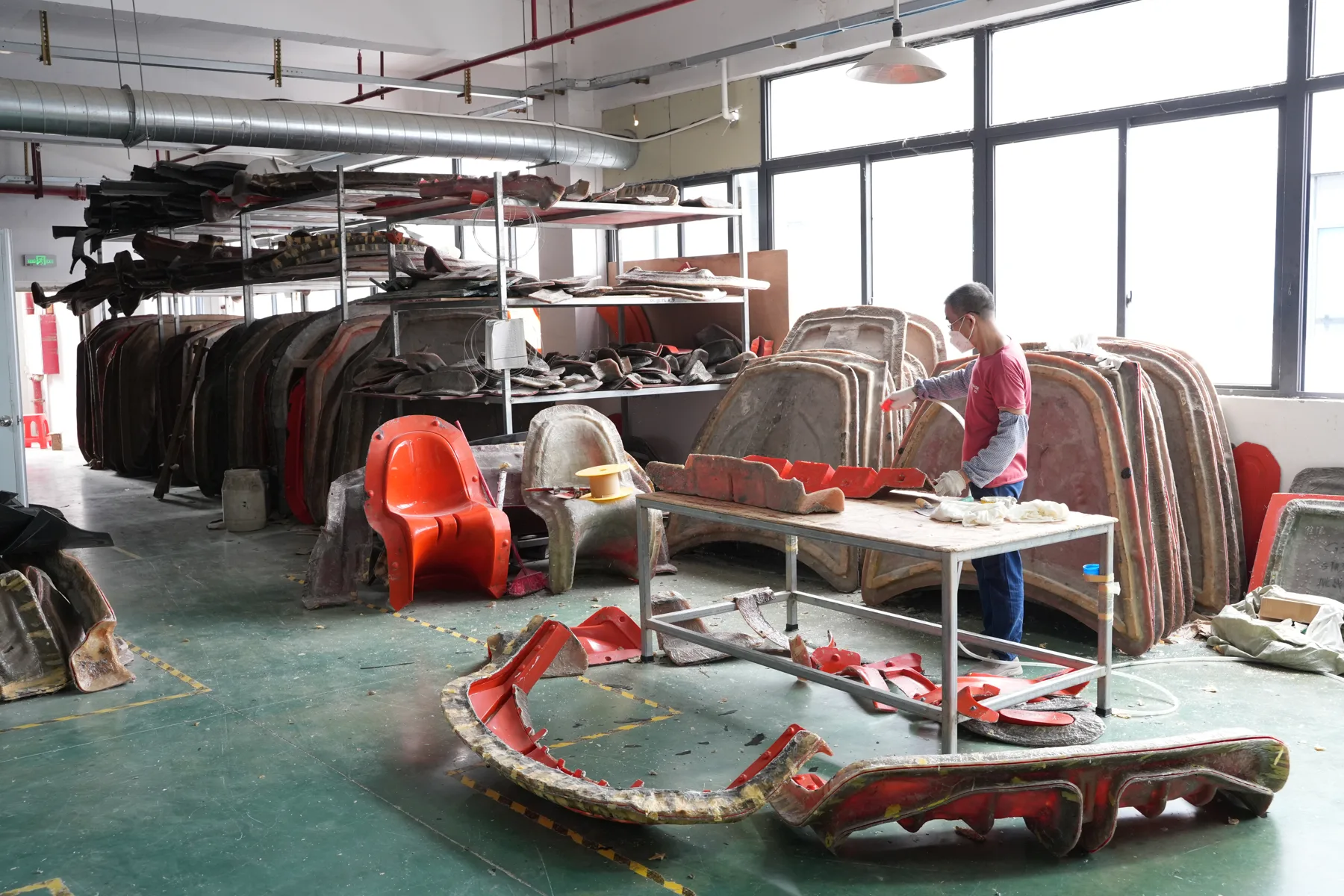
Molds are the part of a supplier you can count. Racks like these are the difference between quoting a shape and owning it.
Note what this test does not require: trust. A company with a tool store can show you a tool store.
Test 2: Where Your Fitment Question Goes
Send one question that only the person who cut the mold can answer. Not "is the quality good" — that has a scripted answer. Something like: on a 2021 car with the factory bumper, the arch sits 4 mm proud at the rear edge; is that the mold or the trim?
Then look at the shape of the reply.
What comes back | Who you are talking to |
|---|---|
A cause: "the mold was cut for the pre-facelift car" / "the trim is hand-finished" / "it needs the bracket" | Someone who has seen the tool and can decide |
A process: "I have asked our factory, I will confirm tomorrow" | A relay. Every future technical question takes the same route |
A reassurance: "no customer has ever complained about the gap" | A sales inbox, and a claim you cannot check |
Both of those first two replies are polite. Only one contains a decision.
Count the hops. One hop to an engineer is a manufacturer. Two hops — you, sales, factory — means the person who can change the part is not in the room, and every technical question you ask for the next three years will take the same route.
Reply speed is a different variable and easy to mistake for this one. A trading company with three staff and a phone can be faster than a factory with twelve engineers, and speed says nothing about who owns the tooling. What a slower answer can contain is the thing you need: a reason. If the gap question is already bothering you before you order, how fitment actually works is the longer version.
Test 3: Whether a One-Off Program Is Physically Possible
Here is the loop a factory runs when the shape you want does not exist yet: scan the car, model the part, print a master, fit the print on the real car, correct it, sign the sample off, cut a mold from it, pull a production sample.
The expensive step is not the design. It is that everything before the mold is disposable — the printed master gets cut apart or binned once the tool exists — and everything after it is irreversible. That is why a factory asks you to confirm a drawing before it spends the money, and why it will not start a new shape for a customer who has not decided. How custom body kits are made walks that sequence from the tooling side.
A trading company cannot run this loop. It can sell you something close out of a catalogue, and it will: "we have a similar style". Similar is fine when you are restocking a shape that already sells. It is not fine when the shape is the reason your customer is buying from you rather than from the shop across town.
Two caveats before you lean on this test. A new mold is a real cost and a real wait — weeks, not days — and it usually belongs to whoever paid for it, so settle that in writing before the first cut. And if you only need twenty pieces of an existing shape, this test tells you nothing; skip it.
Test 4: Who Is Answerable When a Part Arrives Wrong
Every supplier says they stand behind the part. The difference shows up in what standing behind it can physically consist of.
A manufacturer can run the mold again. The remedy for a wave in the clear coat or a panel that will not sit is another panel, made on the same tool, from the same material, to the same shape — so the fix converges instead of drifting.
A trading company cannot make the part, so its options are bounded by what the factory will give it.
What goes wrong | What a manufacturer can do | What a trading company can do |
|---|---|---|
A wave or a pit in the clear coat | Re-make the panel on the same tool, same material | Replace from the factory's next run, or credit |
A panel that will not sit on your customer's car | Re-check the mold against the car, then correct or re-cut it | Ask the factory to check, and pass the answer back |
A year-to-year change nobody mentioned | Cut a revised tool and hold both versions | Sell you the version in stock |
The two right-hand columns are both reasonable outcomes, and on a cheap catalogue item a credit is often better than a replacement. What the right-hand column cannot promise, and what you have no way to check, is that the replacement came off the same tool as the batch you already fitted to eleven cars.
So the question is not "do you have a warranty". It is: if you agree this part is yours, what do you do, how long does it take, and which company owes it in writing? A warranty from a company that is not the maker is a promise about somebody else's production schedule.
The other half of the test is inspection, because a remedy you never need beats a good one. Ask what gets checked before packing, and whether the answer is a standard or a feeling. At this factory the surface standard is written down — no pits, no whitening, no waves, no wrinkles, no touch-ups — and it is checked on the bench.

Surface work happens on the floor, panel by panel, against a written standard — not on a certificate.
Test 5: What the Price Is Made Of
A quotation is a stack of costs, and the stack is roughly the same everywhere.
Cost line | What drives it | What a trader's quote does with it |
|---|---|---|
Material grade | Wet layup versus prepreg with vacuum cure — different weight, surface and consistency | Passes it through, often without naming the grade |
Layup and finishing | Hours of hand work: cut, lay, bag, cure, trim, sand, clear | Invisible; you are quoted a finished part |
Cure time | Vacuum vessels are capital equipment with a queue, and a part occupies one for hours | Invisible, and it is the reason a short promise slips |
Mold amortization | Somebody paid to cut the tool and expects it back across a run | Bundled into the unit price, or charged as a tooling fee |
Terms | Whether the quote is EXW or FOB decides where your responsibility starts (Incoterms 2020) | Frequently left vague until you ask |
A trading company's quote holds the same stack plus a layer you cannot see. That is why it is usually higher on an identical part — and why it can be lower when the trader buys enough volume across several factories to beat what one factory will quote you for forty pieces. Both are normal. The mistake is reading the number as a verdict on the supplier's identity: price tells you about volume and terms, not about who owns the tool.
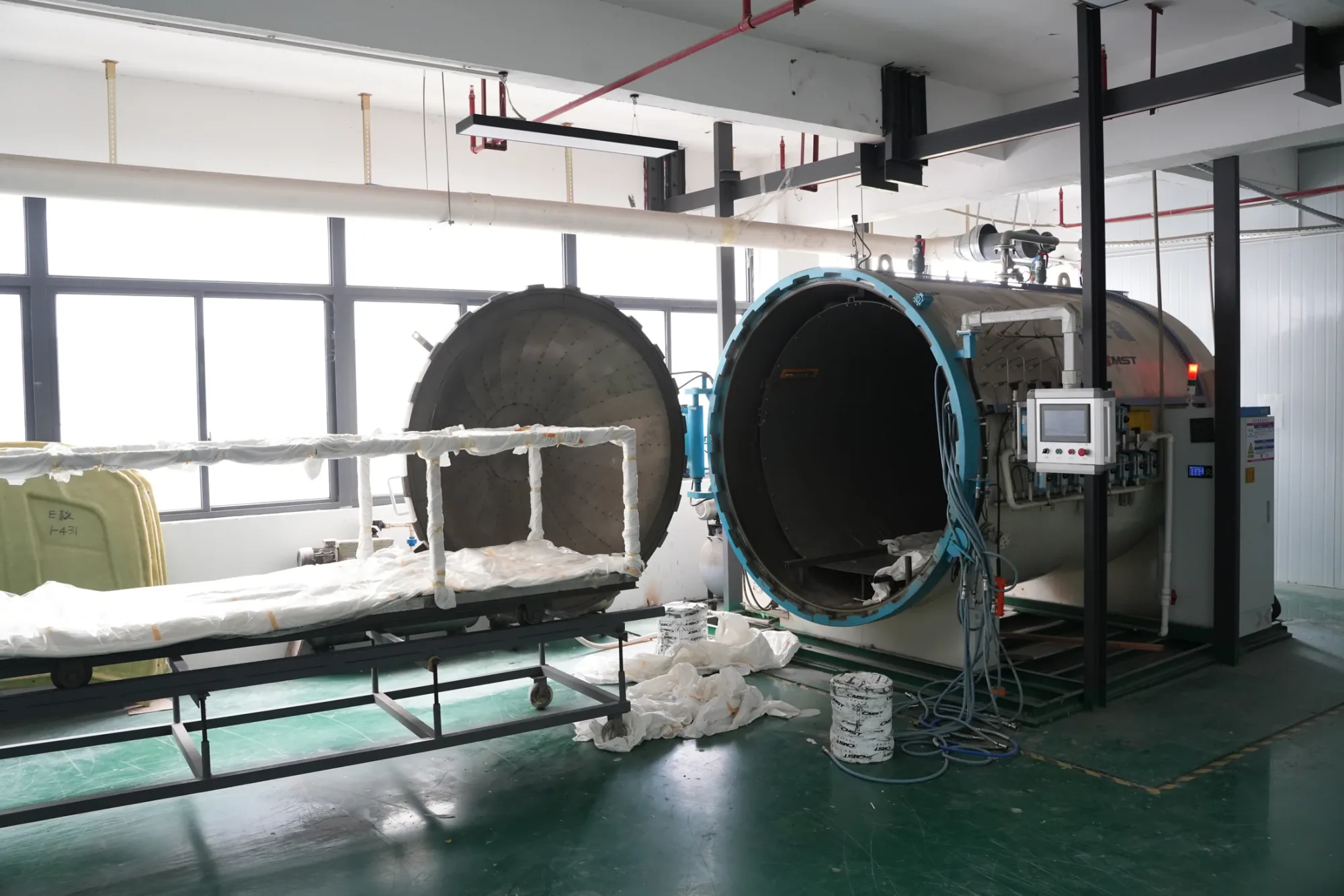
Cure capacity is a cost inside the quote, and it is the kind of equipment a reseller does not carry.
When a Trading Company Is the Better Call
Five situations where the middle layer earns its money, and where going direct is the worse decision:
- You need several brands or categories in one shipment. Five factories consolidated into one container beats five sets of freight, documents and arrival dates.
- Your quantities are small and mixed. A factory's minimum is per shape; a trader's minimum is per order.
- You do not want to be an importer. Customs, duties, paperwork and a forwarder relationship are real work, and a trader can own all of it.
- You need someone in your time zone. A 12-hour reply is a fine promise; a supplier who answers at 9 a.m. your time is a different service.
- You need credit terms more than you need tooling. Stock you can collect today is worth more than a shape you can change next quarter.
The trade-off is not "margin versus nothing". It is margin versus the stock, the credit and the local answers you would otherwise have to fund yourself — buying direct from a manufacturer moves those onto your side of the table, and that is a decision about your own cash flow, not about who is more honest.
What a trader cannot give you is the two capacities in Tests 1 and 2. If your business depends on shapes that are yours, or on changing a part quickly when a customer's car says so, that gap is the whole decision.
What This Factory Looks Like Against the Five Tests
Applied to us, with the limits included.
Tooling. At CMST the tool store holds more than 10,000 molds accumulated across the product history, on site across 8 workshops and 6,999 m². That figure is a history rather than a current inventory — it counts every tool kept since the 1990s, not just the shapes in production this year — but the point of the test survives: the tool store exists and can be walked. A walk through the workshops shows where panels are laid up, bagged, trimmed and finished.
Fitment answers. The technical and design team is 12 people with a 3D scanner in-house, and questions about a gap, a bracket or a year-to-year change go to them rather than to a sales desk. Reply time is quoted at 12 hours, which is a time-zone promise, not a manufacturing one.
Custom programs. The Test 3 loop is the standard route here: design, printed master, trial fit on the car, sign-off, mold, production sample. One thing to know before you ask — the 3D printing is done by an outside shop, so the master stage waits on their queue as well as ours, which adds days to any promise shorter than a fortnight.
Answerable. The surface standard described above is the one used at final check. Warranty terms are not published on the site, deliberately, because the remedy has to match the market and the account. Ask what remedy your account carries, in writing, rather than assuming a policy exists.
Price. Minimum order is one piece for aero parts and four for wheels; standard lead time runs 7–20 days, with peak season queued and notified in advance. Prices are quoted per account and not published, which is normal in this trade and also means you cannot benchmark us from a web page.
Where we are the wrong supplier. We build carbon aero parts and supply forged wheels, and that is the whole catalogue — if you need one invoice covering aero, lighting and suspension from four factories, a trading company is the correct answer and we will not pretend otherwise. We do not publish certification documents on this site, so if your market requires a certified supplier at the paperwork level, ask us for the current position and treat it as an open question rather than a box we can tick. And twelve engineers is a small team: they answer, but not within the hour.
Scale, for context: exports are around half of output, to more than 80 countries, with 17 core dealer regions — tuning shops and distributors in roughly equal numbers, not end customers. And the test has been run by somebody else for longer than most audits last: a distributor in Thailand, Flinestone Auto Parts, has been ordering forged wheels and carbon aero parts from this factory since 2014. Twelve years of reorders is a harder test of fitment data than a site visit.
The Five Questions, and Where This Leaves You
If you take one thing from this, take the questions. They work on any supplier in any category, and they are short enough to paste into an email today.
- How many molds do you own, and can I see the tool store on a video call?
- If the fit is wrong on my car, who decides whether it is the mold or the trim, and can I talk to them?
- If I need a shape that is not in your catalogue, walk me through what happens between my drawing and my first production part.
- If we agree a part is faulty, what do you do, how long does it take, and which company owes it in writing?
- Is this quote EXW or FOB, and which parts of the journey are mine?
The answers sort suppliers faster than any amount of catalogue reading. A manufacturer will be slightly bored by them. A trader will be slightly vague. Send the same five to us and the reply will come from the people who would actually cut the mold.
If you want the rest of the picture — terms, the first order, and what support has to travel with a direct account — that is the dealer's guide to partnering directly with a carbon aero factory. If you are checking whether a territory is still open, the distributor programme lists the current regions and what an account includes.
FAQ
Is a trading company always more expensive?
No, and treating it that way costs buyers money. On an identical catalogue part a trader is usually dearer, because its margin sits on top of the factory price. But a trader buying across several factories can beat a single factory's quote on small quantities, and it can beat it on freight by consolidating your order. Compare landed totals, not unit prices.
Can a factory also be a trading company?
Yes, and this is the most common arrangement in Chinese manufacturing. A workshop with an export department sells other factories' products alongside its own; a trading company takes a stake in a partner factory and starts calling itself a manufacturer. The label tells you very little. Who holds the mold and who answers the technical question tells you almost everything.
How can I check a supplier without flying to China?
Four things, in order of cost: ask for a video call walked through the tool store rather than a photo set; send one technical question and count how many people it passes through before it comes back with a reason; pull the company's registration record to confirm the entity exists and what it is registered to do, then check that any certificate names the same legal entity you are paying and verify it with the issuing body rather than the supplier (what ISO 9001 certification actually covers) — in a market like Germany, for example, a body kit also needs TÜV or ABE approval to be road-legal, and the supplier is the last party who should be telling you whether it has one; and if the order is large enough to justify it, pay for a third-party inspection at the factory rather than at a warehouse.
Does buying from the manufacturer mean I handle the import?
Usually yes. Factory quotes are typically EXW or FOB, which puts the freight, the customs entry and the duty on your side, and those are the jobs a distributor was being paid for. Some factories will quote DDP and manage the door-to-door leg; that depends on the destination and the account, so ask before you compare prices, because the two numbers are not the same number.
Next step
Send the vehicle, the parts you are considering and the finish you want — we reply with fitment notes and a quote.
Send an inquiryKeep reading
Related notes
Buying Direct From a Manufacturer: The Catch
Buying direct from a manufacturer swaps a distributor's margin for its work: stock, fitment answers, support. What a dealer takes on, and how to test it.

Inside a Custom Carbon Fiber Parts Factory
Eight workshops, more than ten thousand molds, and a surface check that fails a panel for five named defects. What a buyer sees walking a real factory.

Dodge Challenger Widebody: A Buyer's Guide
A Challenger widebody is either the factory package or a conversion a shop builds. What the factory changed, and what a narrowbody job really takes from you.